 EatSee
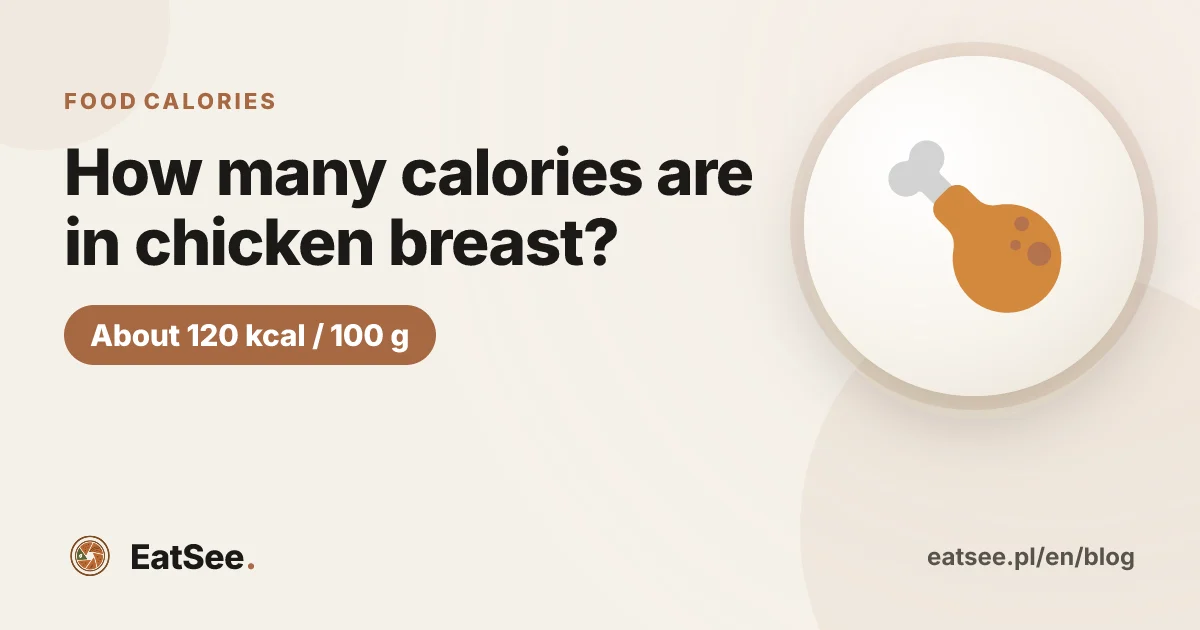
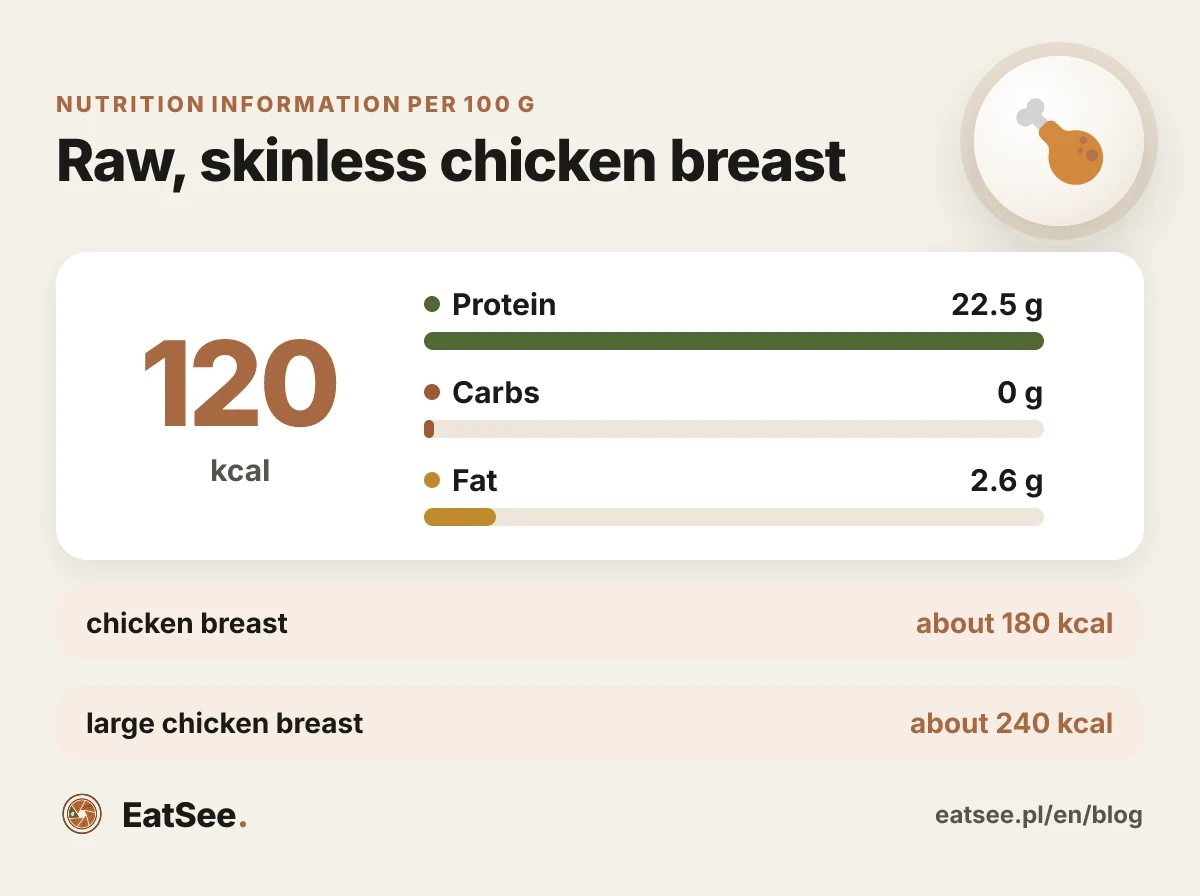
How many calories are in chicken breast? Raw chicken has about 120 kcal per 100 g, while boiled chicken has about 151 kcal and grilled and roasted chicken each have about 165 kcal. A 150 g serving of raw chicken breast has about 180 kcal and 34 g of protein. After cooking, 150 g of cooked chicken has about 227 kcal, because the chicken loses water—not because it gains calories.
- chicken breastabout 180 kcal
- large chicken breastabout 240 kcal
How many calories are in chicken breast, depending on how it’s cooked?
The values below are for meat without skin, breading, or sauce. Pan-fried chicken breast doesn’t have one fixed calorie count: it depends greatly on the amount of fat and breading, and how much oil stays in the pan versus ends up on your plate.
| Type of chicken breast | Calories per 100 g | Calories per 150 g serving |
|---|---|---|
| Raw | about 120 kcal | about 180 kcal |
| Boiled | about 151 kcal | about 227 kcal |
| Grilled | about 165 kcal | about 248 kcal |
| Roasted | about 165 kcal | about 248 kcal |
| Pan-fried | depends on fat and breading | depends on fat and breading |
These are estimates—specific cuts of meat can vary in fat and water content, and cooking changes their weight. You can check the values separately for raw chicken breast and grilled chicken breast.
Why does boiled chicken breast have more kcal per 100 g than raw chicken?
When you boil, grill, or roast chicken, it loses some water and weighs less. Its calories don’t decrease in proportion to the water lost, so 100 g of cooked chicken breast contains more meat than 100 g of raw chicken. As a result, the calorie count per 100 g goes up.
That doesn’t mean cooking itself “adds” calories. If you weigh 150 g of raw chicken breast, it has about 180 kcal before cooking. After cooking, that same serving will weigh less, but it won’t become a 150 g serving of cooked chicken. By contrast, 150 g of cooked chicken breast represents a larger amount of meat before cooking, which is why the chart lists about 227 kcal.
When comparing labels and recipes, check whether the weight refers to the raw or prepared product. This is one of the most common reasons values differ between apps and charts. Find more examples in our guide to how to count calories.
How much protein is in chicken breast and a 150 g serving?
Raw, skinless chicken breast provides about 22.5 g of protein per 100 g. So 150 g of raw chicken breast has about 34 g of protein, while 200 g has about 45 g. That’s a substantial serving of this macronutrient, which is why chicken breast often features in post-workout lunches or salads you want to make more filling.
A 100 g serving of boiled or grilled chicken breast may contain approximately 29-31 g of protein. Cooked chicken has more protein per 100 g mainly because it contains less water. A 150 g serving of cooked chicken breast usually has about 44-47 g of protein, though the exact amount depends on the meat and how it’s prepared.
Protein is an important part of your diet, but you don’t have to build every meal around chicken. Fish, eggs, dairy, and legumes are good options too. To estimate your own needs, see our guide to how much protein to eat each day.
How many calories are in pan-fried chicken breast?
When pan-frying, it’s not just the chicken breast itself that matters—the cooking fat counts too. Each gram of oil has about 9 kcal, so 5 g of oil that actually ends up in your serving adds about 45 kcal. If 150 g of raw chicken breast has about 180 kcal, adding that amount of oil brings the total to about 225 kcal, without breading or other extras.
Not all the fat in the pan stays on the meat, so don’t automatically assume you ate all the oil you used. The easiest approach is to measure it before cooking and, for a dish shared with others, divide the oil’s calories among the servings. A tablespoon of mayonnaise-based sauce, breading, or cheese can make a bigger difference than seasonings.
For easier calorie tracking, grill or roast the chicken without added fat, or use a measured amount. Salt, pepper, paprika, and herbs have little effect on the calories in a serving. But remember to count the marinade if it contains oil, honey, or sweet sauce.
How do you count the calories in chicken breast in your meal?
First, decide whether you’re weighing the meat raw or cooked. Then multiply the calories per 100 g by the serving weight and divide by 100. For 150 g of raw chicken breast: 120 × 150 ÷ 100 = about 180 kcal. For 150 g of boiled chicken: 151 × 150 ÷ 100 = about 227 kcal.
Here’s a simple way to do it:
- Weigh the chicken breast before cooking if you’re using values for the raw product.
- Log the oil, breading, sauce, and any extras you actually eat separately.
- If you’re tracking cooked chicken, use the values for boiled, grilled, or roasted chicken and enter its weight after cooking.
- For a dish serving several people, divide the ingredients’ calories by the number of servings or weigh your portion on the plate.
Don’t have a scale handy? You can use our tips on estimating a serving without a scale. For a meal with extras, such as chicken with rice and vegetables, EatSee can estimate calories and macronutrients from a photo; you can adjust the result by changing the serving size or ingredients. It’s a helpful estimate, not a gram-for-gram measurement.
Does chicken breast fit into a weight-loss diet?
Chicken breast can be a convenient source of protein, but eating it alone doesn’t determine whether you lose weight. Your overall diet, portions, and what you serve it with matter. A fillet with roasted potatoes and vegetables is a different meal from a breaded, pan-fried fillet served with plenty of sauce.
You don’t have to choose the leanest option every time, either. If you like pan-fried chicken, include the oil in your calculations and have a portion that fits your day. It helps to count consistently in the same way—raw with raw, cooked with cooked—instead of looking for a perfect number for every piece of meat.
FAQs
How many calories are in 150 g of chicken breast?
How much protein is in chicken breast?
Is pan-fried chicken breast high in calories?
Should you count calories for raw or cooked chicken breast?
Can chicken breast help you lose weight?
This article is for informational purposes and does not replace advice from a doctor or dietitian. Nutrition information is approximate—it depends on the variety, brand, and preparation method. Check the product packaging for exact information. This article was prepared by the EatSee editorial team. Editorial policy.