 EatSee
Calorie tracking that doesn't take up your time
The hardest part of tracking calories isn't the counting—it's sticking with it. If logging lunch means spending several minutes searching and entering grams, it's easy to give up after a week. That's why EatSee gives you several ways to add a meal:
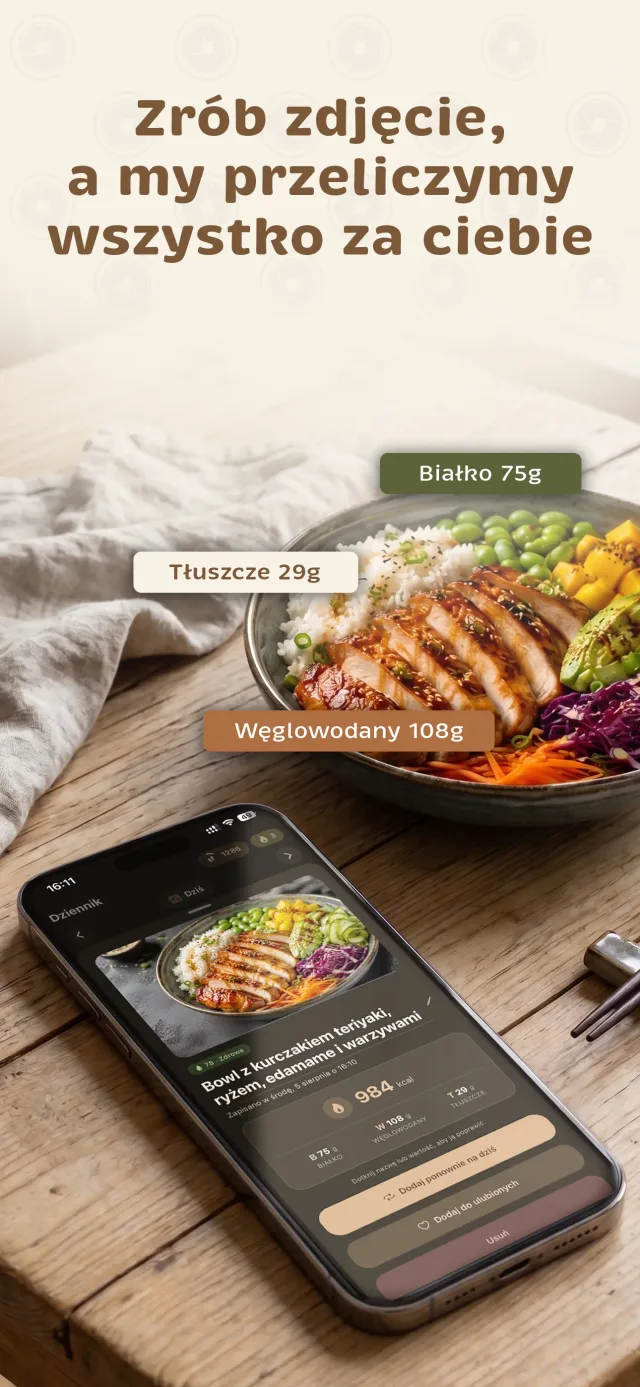
- With a photo — AI identifies the dish and estimates calories, macros, fiber, sugars, and salt,
- By voice — say what you're eating in one sentence, and the meal goes into your food diary,
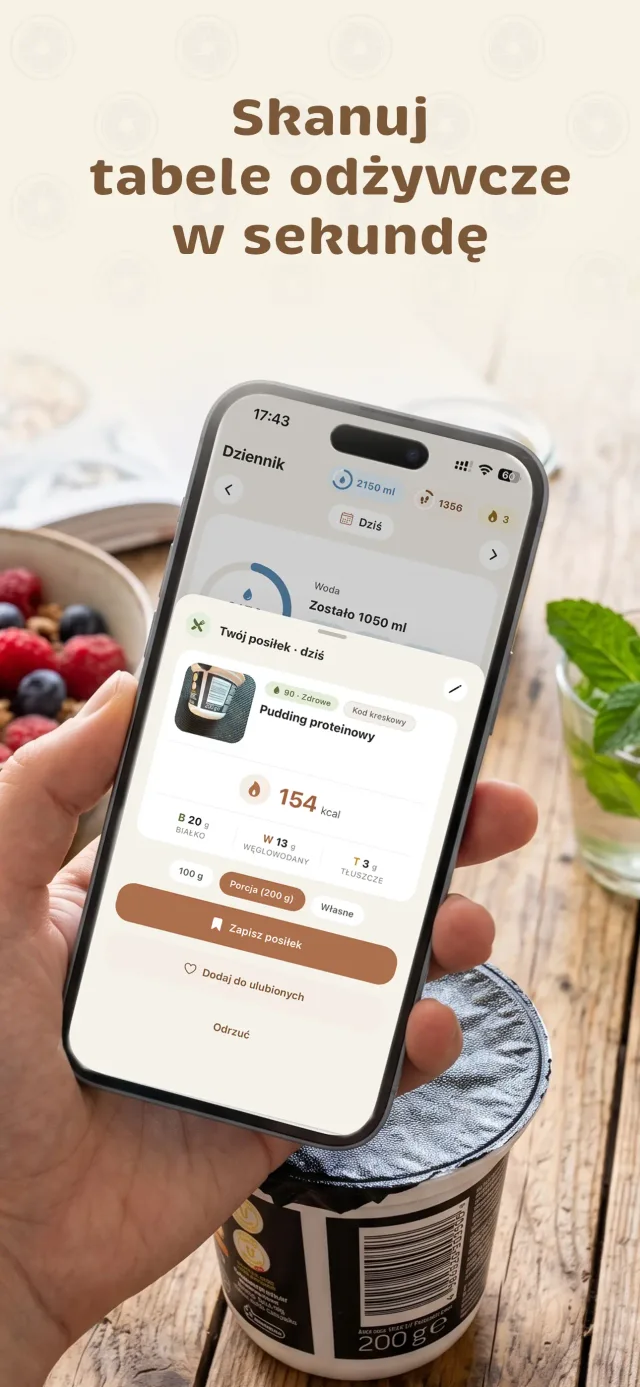
- With a barcode — for store-bought products, without using an AI analysis,
- With a photo of the label — when the product isn't in the database,
- Manually or from favorites — for meals you eat regularly.
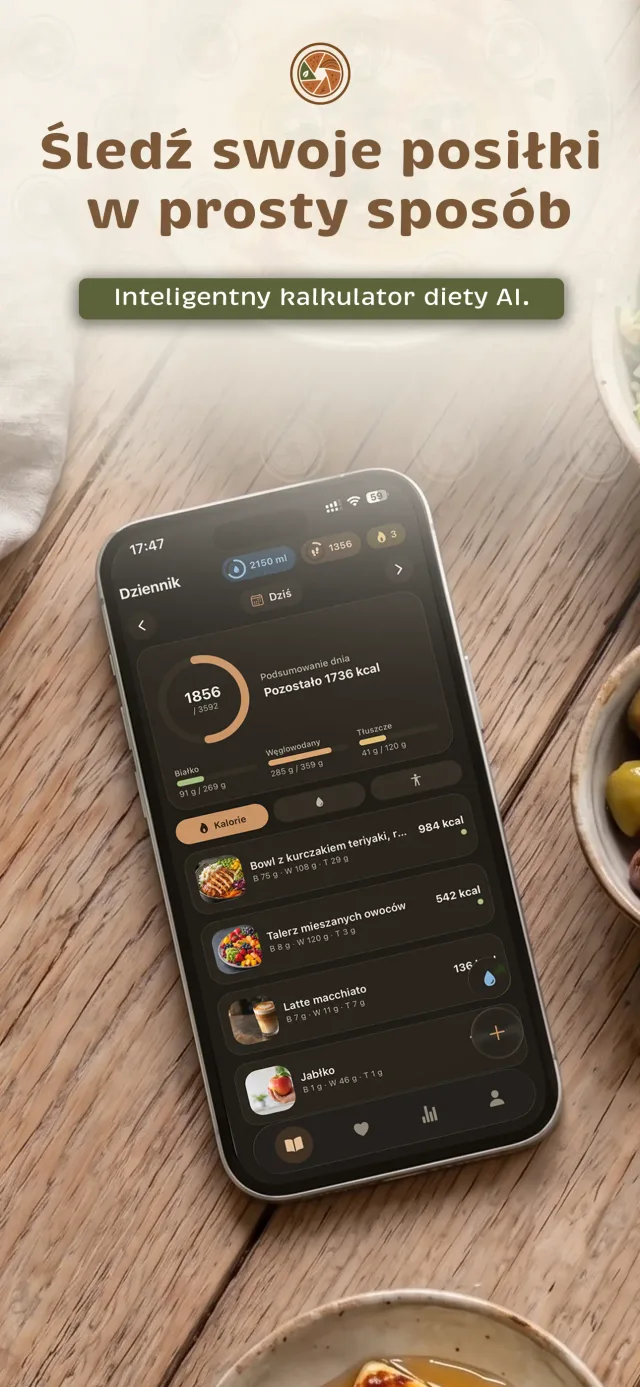
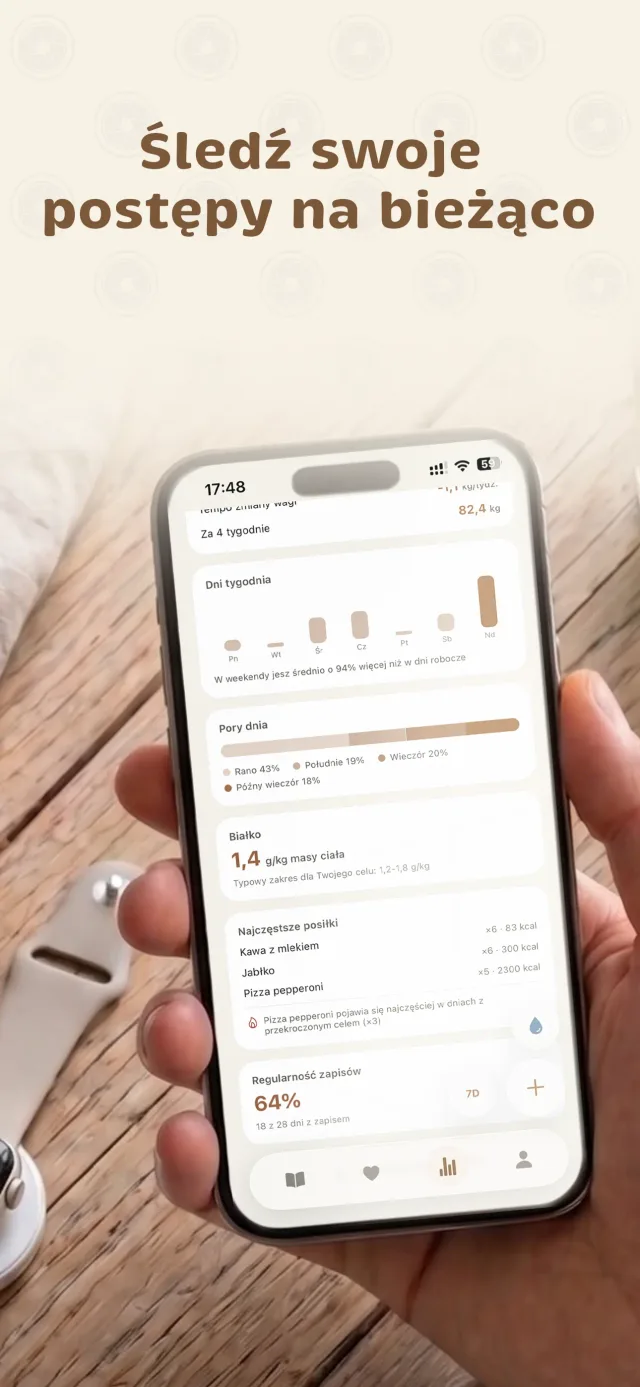
Your food diary immediately shows how many calories and macronutrients you have left for today. No mental math or spreadsheets needed.
Where does EatSee get its calorie estimates?
It depends on how you add your meal:
- Photo and description — AI identifies the dish and its ingredients, estimates the serving, and calculates nutrition information from there. It's an estimate, so you can adjust the result ingredient by ingredient. Learn more on our photo calorie tracker page.
- Barcode and label — values come from the product data, and you choose the serving. See how the barcode scanner works.
- Meal plan — AI selects the dishes, but code calculates calories and macros from the ingredients' nutrition information. Find details on our meal plan generator page.
All values in the app are estimates. For everyday tracking, they can be enough to help you stay on track with your goal. When precision matters, a kitchen scale and the package label can help.
Who is EatSee for?
- People who want to lose weight — a calorie goal based on your profile and a view of what's left for today make it easier to stick to a deficit. Find a reasonable deficit with our calorie deficit calculator.
- People building muscle — see protein for every meal and in your daily summary. Calculate how much you need with our protein calculator.
- People who want to eat more mindfully — fiber, sugars, and salt compared with daily guidelines tell you more than calories alone.
Calorie tracking isn't right for everyone. If you have a medical condition, take medication, are pregnant or breastfeeding, or have a history of eating disorders, set your goal with a doctor or dietitian.
Available in 14 languages, with Polish dishes too
EatSee was created with the Polish market in mind. Its AI recognizes Polish dishes such as dumplings (pierogi), breaded pork cutlets (schabowy), and sour rye soup (żurek), while its barcode database includes products sold in Polish stores. The app is available in Polish and 13 other languages.
Want to check the calories in a particular food before installing the app? Explore our calorie chart or free calculators.
How to choose a calorie tracking app
The best app is one you'll actually use. Before you decide, check whether it's easy to add the meals you usually eat, adjust the results, and see more than just calories. For a full checklist, read our guide on how to choose a calorie tracking app.
FAQs
Is the EatSee calorie tracking app free?
How accurately does EatSee calculate calories?
Do I need to weigh my food?
Does EatSee track protein and other macronutrients too?
Can the app help me lose weight?
Which phones does EatSee work on?
What happens to my data?
Nutrition information in EatSee is estimated, and the app is for informational purposes—it doesn't replace advice from a doctor or dietitian. If you have a medical condition or are pregnant or breastfeeding, set your goals with a professional. Where the app gets its data.