 EatSee
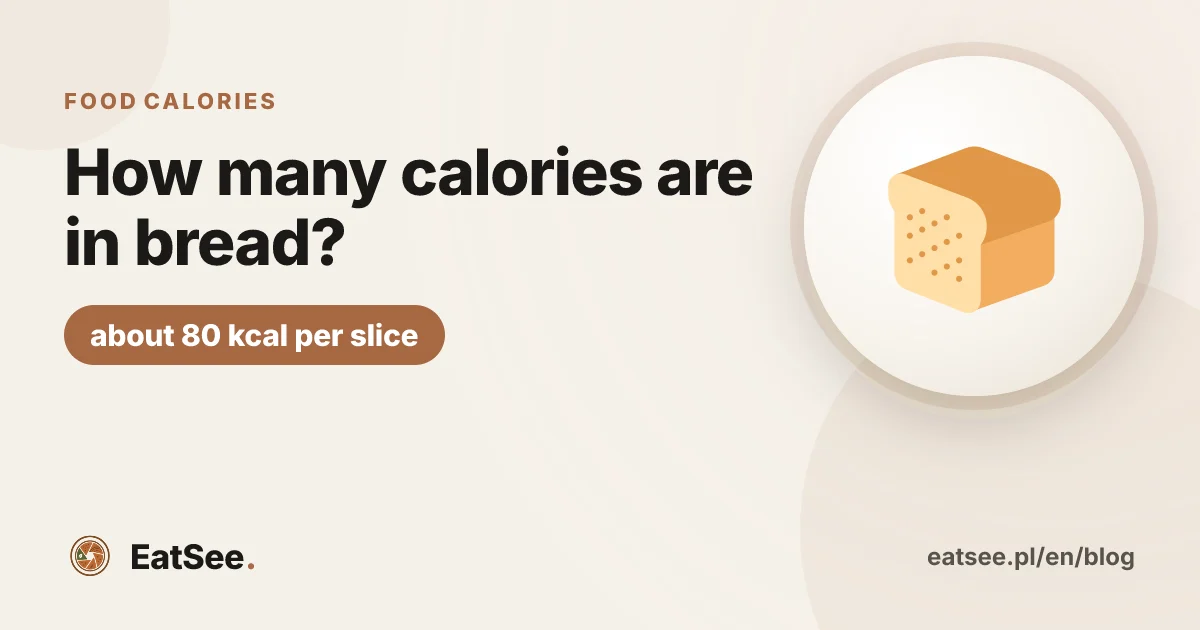
How many calories are in bread? Regular wheat bread has about 266 kcal per 100 g, and a 30 g slice has about 80 kcal. Rye bread has about 259 kcal/100 g, whole-grain bread about 252 kcal/100 g, and a regular wheat roll about 275 kcal/100 g. The type of bread and serving weight determine the total.
How many calories are in a slice of bread?
Calories per slice depend not only on the recipe, but also on how thickly the loaf is sliced. For an easy comparison, I’m using a 30 g slice and a 60 g roll below.
| Type of bread | Calories per 100 g | Typical serving | Calories per serving |
|---|---|---|---|
| Wheat bread | about 266 kcal | slice, 30 g | about 80 kcal |
| Rye bread | about 259 kcal | slice, 30 g | about 78 kcal |
| Whole wheat bread | about 252 kcal | slice, 30 g | about 76 kcal |
| Graham bread | about 255 kcal | slice, 30 g | about 77 kcal |
| Multigrain bread | about 265 kcal | slice, 30 g | about 80 kcal |
| Wheat roll | about 275 kcal | roll, 60 g | about 165 kcal |
These are approximate values. Recipes vary between bakeries and manufacturers, and slices rarely weigh exactly the same. Find more information in the bread calorie chart.
Does whole-grain bread have fewer calories than wheat bread?
Not necessarily. In this comparison, whole-grain bread has about 252 kcal per 100 g, while wheat bread has about 266 kcal. The difference is small and may vary depending on the ingredients and moisture content of the bread. Wholemeal and whole-grain bread do not always mean exactly the same thing, so it’s worth checking the name and ingredients of the specific loaf.
There’s more to consider than just calories when choosing bread. Bread with a higher proportion of whole grains usually provides more fiber than white bread, but the amount depends on the product. A dark color alone doesn’t guarantee that bread is whole-grain—it may come from added ingredients, so check the label.
You don’t have to choose bread based only on the lowest calorie count. If whole-grain bread keeps you full longer and you simply enjoy the taste, that’s a good reason to choose it. For more meal ideas, see our article on healthy breakfasts.
Why aren’t all slices the same?
An average slice may weigh about 25–40 g, and a thick slice can weigh even more. For wheat bread, that comes to about 67 kcal for 25 g or 106 kcal for 40 g. So the type of bread alone isn’t enough to accurately estimate a serving.
The loaf’s weight and how it’s sliced matter, too. Thin slices of sandwich bread may weigh less than thick slices cut by eye, even if both loaves have a similar calorie content per 100 g. If you don’t have a scale, this simple way to estimate serving sizes without a scale may help.
Remember the toppings, too. Butter, cheese, spreads, cold cuts, and sweet spreads all add calories to a sandwich. Two similar slices can have very different calorie counts once you add toppings—sometimes what you put on the bread makes a bigger difference than choosing wheat over rye.
Does bread cause weight gain?
No—no single food causes weight gain on its own. Changes in body weight mainly depend on the balance between the total energy you get from food and drinks and your needs over time. Bread can absolutely be part of your diet, even if you’re trying to lose weight.
In practice, though, it’s easy to eat more than you planned when the slices are large and the toppings generous. You don’t need to cut them out or eat dry sandwiches. Just count the bread and toppings together, and adjust your serving to your hunger, the rest of your meal, and your goal.
If you’re planning your food for the whole day, bread can be part of breakfast or dinner, alongside foods such as vegetables and a source of protein. This sample 2000 kcal meal plan for 7 days shows how different foods can fit into a day—it’s inspiration, not a ready-made calorie target for everyone.
How do you count the calories in bread and a sandwich?
The easiest way is to use the values on the package and weigh your serving. If the bread has 266 kcal per 100 g and your two slices weigh 60 g in total, the calculation is: 266 × 60 ÷ 100 = 159.6, or about 160 kcal when rounded. Then add the calories from the toppings.
Bread from a bakery doesn’t always come with a label. In that case, you can use an approximate value for that type of bread and estimate the weight of your slice. If you count calories regularly, this simple step-by-step guide to counting calories can help you track the whole meal, not just the bread.
You can also use EatSee, a photo calorie tracker. The app estimates calories and macronutrients from a meal photo, and you can adjust the result by changing the serving size. With a sandwich, remember that slice thickness and the amount of toppings can affect the estimate.
What bread should you choose for everyday meals?
Choose bread you enjoy and that fits your meals. If you want to get more fiber, check the ingredients and look for bread with a higher proportion of whole grains. If you prefer wheat bread, there’s no reason to treat it as off-limits—your overall meal plan is what counts.
A few simple habits may help:
- compare labels per 100 g, not just by the bread’s name;
- if the slices are especially thick, estimate their weight or weigh the serving;
- include the toppings, especially if your sandwich has several layers;
- look at your whole day instead of judging a single food in isolation.
You don’t have to decide once and for all whether wheat, rye, or graham bread is best. Choose bread you enjoy, that keeps you full, and that fits into your everyday meals—no pressure and no need to unnecessarily ban sandwiches.
FAQs
How many calories are in a slice of wheat bread?
How many calories are in a slice of rye bread?
Does whole wheat bread have fewer calories than white bread?
Does bread make you gain weight?
How many calories are in a regular bread roll?
This article is for informational purposes and does not replace advice from a doctor or dietitian. Nutrition information is approximate—it depends on the variety, brand, and preparation method. Check the product packaging for exact information. This article was prepared by the EatSee editorial team. Editorial policy.