 EatSee
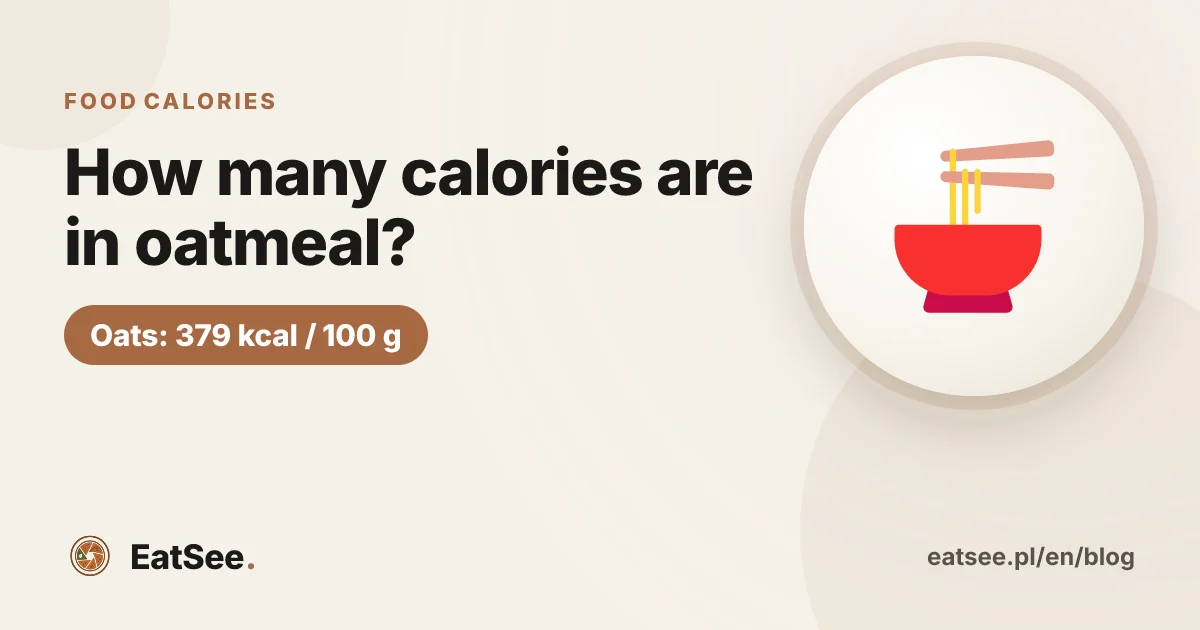
How many calories are in oatmeal? 40 g of oats has about 152 kcal, before toppings, while a serving made with 200 ml of 2% milk has about 252 kcal. Prepared oatmeal made with water may have about 71 kcal per 100 g, since the result depends on the amount of water and the final weight. Fruit, nuts, and honey add calories, but they’re easy to account for.
How many calories are in oatmeal made with water or milk?
The biggest factors are how much oats you use and what you cook them in. Water adds no calories, but milk does. That’s why a bowl made with the same amount of oats will usually have more calories with milk than with water.
| Serving | Calories, about |
|---|---|
| Dry oats, 100 g | 379 kcal |
| Dry oats, 40 g | 152 kcal |
| Oatmeal made with water, 100 g prepared | 71 kcal |
| Oatmeal made with water, 200 g prepared | 142 kcal |
| 40 g of oats + 200 ml of 2% milk | 252 kcal |
For milk, we used about 50 kcal per 100 ml. The value depends on the type of milk and its fat content, as well as how much oatmeal evaporates during cooking. The oats and oatmeal made with water calorie charts also show values per 100 g.
The values in the table are estimates and may vary depending on the product and recipe. For prepared oatmeal, the final weight matters too—the more water you use, the fewer calories per 100 g, even though the oats themselves have the same number of calories.
Dry oats vs. prepared oatmeal: why the difference?
100 g of dry oats has about 379 kcal. After cooking, the oats absorb water and weigh more, but water doesn’t “take away” calories. It only changes the calories per 100 g of prepared oatmeal.
For example, 40 g of oats provides about 152 kcal. If you cook them with water, the whole dish still has about 152 kcal, whether or not the water is included in the final serving. If the cooked serving weighs about 214 g, it will have approximately 71 kcal per 100 g.
So don’t compare 100 g of dry oats with 100 g of prepared oatmeal as if they were the same product in the same form. To calculate the calories in your serving, the easiest way is to weigh the dry oats before cooking. The same principle applies to rice and other foods that absorb water during preparation.
How many calories do fruit, nuts, and honey add?
Toppings can make oatmeal tastier and round out your meal, but it’s easy to misjudge their amounts by eye. This is especially true of nuts and honey: a small handful or a generous spoonful can weigh more than you might think.
| Topping | Example serving | Calories, about |
|---|---|---|
| Banana | 50 g | 45 kcal |
| Apple | 50 g | 26 kcal |
| Blueberries | 50 g | 29 kcal |
| Walnuts | 10 g | 65 kcal |
| Honey | 10 g | 30 kcal |
For example, 40 g of oats, 200 ml of 2% milk, 50 g of banana, 10 g of walnuts, and 10 g of honey add up to about 392 kcal. If you add more nuts or honey, the total will go up—not because those ingredients are “bad,” but because they’re quite calorie-dense in small amounts.
You can weigh a banana after peeling it; an average banana weighs more than a small one and less than an extra-large one. Read more about servings in our article on how many calories are in a banana. The calories in a serving of seasonal or dried fruit can also vary considerably.
Is oatmeal a good fit for weight loss?
Yes. Oatmeal can fit into a weight loss plan if its calories fit your plan for the whole day. You don’t have to give up milk, banana, or nuts—you can simply adjust the amounts to suit your serving and what else you eat.
If you want to reduce the calories in your bowl, try:
- measuring out 30–40 g of oats instead of pouring them straight from the package;
- cooking them with water or using a mix of water and milk;
- adding fruit for flavor and measuring nuts or honey with a teaspoon or on a scale;
- making sure your meal is filling, rather than choosing such a small serving that you’re looking for a snack again an hour later.
Oats provide fiber, and toppings let you adjust the flavor and how filling the meal is. But no single food determines weight loss—it’s your energy balance over time that matters. To better understand how this works, read our article about the calorie deficit.
Oatmeal for muscle gain: how to increase the calories
If you want to increase the calories in your meal, the easiest options are to add more oats or ingredients that provide more energy in a small amount. You could use milk instead of water, or add nuts, seeds, or another serving of fruit. The changes don’t have to be big—an extra 10 g of walnuts has about 65 kcal.
Oatmeal can be a convenient breakfast when you’re working on muscle gain, but it doesn’t build muscle on its own. Your total daily energy and protein intake, regular training, and rest all matter. If you’re planning to change the calories in your diet, you can use our daily calorie needs calculator, and find sample meals in the 2000 kcal meal plan. Use it as a reference, not as a one-size-fits-all value.
How do you calculate the calories in your everyday oatmeal?
The most reliable way to calculate it at home is simple: record the weight of the dry oats, the amount of milk, and the toppings. You don’t need to weigh the water because it adds no calories. Check the milk label, and use the serving weight or the nutrition information for the specific product when logging toppings.
Here’s an example calculation:
- 40 g of oats: about 152 kcal.
- 200 ml of 2% milk: about 100 kcal.
- 50 g of banana: about 45 kcal.
- Total: about 297 kcal, not including nuts or honey.
If you’re cooking a larger batch for several people, add up the calories in all the ingredients, then divide the total in proportion to each serving’s weight. And if you’re having breakfast on the go, you can enter the ingredients and amounts manually or estimate the dish from a photo using the photo calorie tracker—the result is an estimate.
There’s no one-size-fits-all serving of oatmeal. Some days, a smaller bowl before work may suit you better; other days, a larger one after a workout. Choose an amount that leaves you feeling good, and tailor the toppings to your goal. For more ideas for a morning meal, check out our healthy breakfast inspiration.
FAQs
How many calories are in 100 g of oats?
How many calories are in oatmeal made with water?
How many calories are in oatmeal made with milk?
Does oatmeal cause weight gain?
Can you eat oatmeal while trying to lose weight?
This article is for informational purposes and does not replace advice from a doctor or dietitian. Nutrition information is approximate—it depends on the variety, brand, and preparation method. Check the product packaging for exact information. This article was prepared by the EatSee editorial team. Editorial policy.