 EatSee

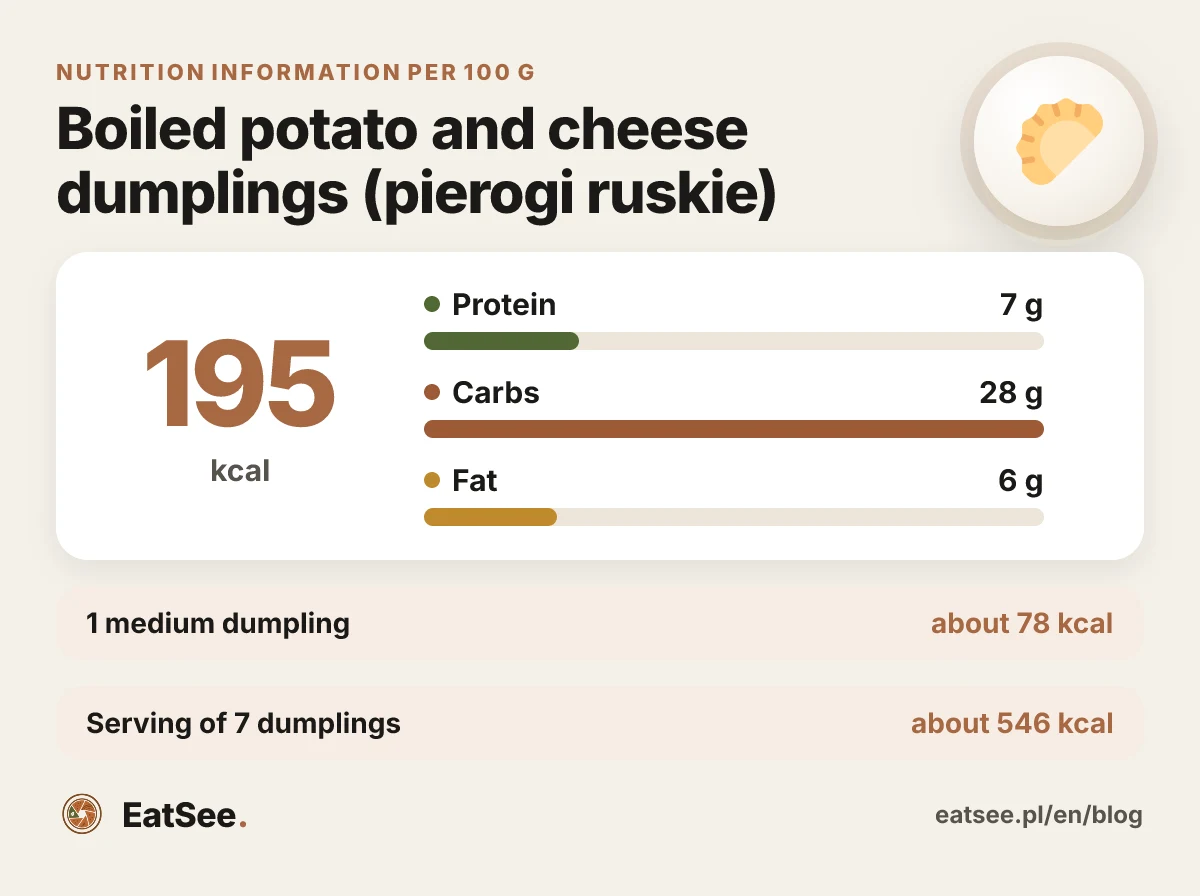
If you’re checking how many calories are in pierogi ruskie, use about 195 kcal per 100 g of boiled dumplings without toppings as a starting point. One dumpling weighing 35-50 g usually has about 68-98 kcal, while a serving of 6-8 dumplings weighing 40 g each provides about 468-624 kcal. Onions, bacon, and frying increase the total.
- 1 medium dumplingabout 78 kcal
- Serving of 7 dumplingsabout 546 kcal
How many calories are in pierogi ruskie per 100 g, dumpling, and serving?
Counting dumplings is a useful shortcut, but it doesn’t always tell the whole story. A small dumpling may weigh about 35 g, while a large one can weigh as much as 50 g. So two servings of six dumplings can have different calorie counts, even if they look similar on the plate.
| Serving of boiled pierogi ruskie without toppings | Assumed weight | Calories |
|---|---|---|
| 100 g | 100 g | about 195 kcal |
| 1 smaller dumpling | 35 g | about 68 kcal |
| 1 medium dumpling | 40 g | about 78 kcal |
| 1 larger dumpling | 50 g | about 98 kcal |
| 6 medium dumplings | 240 g | about 468 kcal |
| 8 medium dumplings | 320 g | about 624 kcal |
The values in the table are for boiled dumplings without toppings. They’re based on 195 kcal per 100 g, so you can easily calculate the value for a different weight: multiply the calories per 100 g by the serving weight, then divide by 100. For example, 280 g of dumplings has about 546 kcal.
What affects the calorie content of pierogi ruskie?
The biggest factors are the dumplings’ weight and the ratio of dough to filling. Thin dough with plenty of filling may have a slightly different nutritional profile than thick, doughier dumplings. The filling matters, too: potatoes, twaróg (Polish curd cheese), onions, and any fat used to fry the onions.
These figures are estimates — recipes, sizes, and filling ingredients vary between homes, restaurants, and ready-made products. If you know the weight and nutrition information for a specific product, you’ll get the most accurate estimate for that serving. You can also find approximate values for pierogi ruskie in the pierogi ruskie calorie chart.
How many calories do onions, bacon, or butter add?
The dumplings are one thing, but toppings can add quite a bit to your plate. Onion on its own is low in calories, but if you cook it in oil, you’ll need to count the oil, too. The same goes for bacon — even a small amount can significantly increase the total.
| Topping | Example amount | Additional energy |
|---|---|---|
| Onion, without fat | 20 g | about 8 kcal |
| Oil for frying the onion | 5 g | about 45 kcal |
| Bacon | 20 g | about 100 kcal |
| Butter | 10 g | about 72 kcal |
Plate example: seven medium dumplings weighing 280 g in total have about 546 kcal. Add 20 g of onion, 5 g of oil, and 20 g of bacon, and the total comes to about 699 kcal. If you fry the bacon and onions together in more fat, the total will be higher.
You don’t need to weigh every crumb. But if you want to compare servings, focus on the amount of oil, butter, and bacon — these usually make a bigger difference than the onion itself.
Do fried pierogi ruskie have more calories than boiled ones?
Usually, yes, because dumplings absorb some of the fat while frying. How much fat stays on them depends on the amount of oil, how long you fry them, and whether you drain them after taking them out of the pan. The calorie count also depends on how the dumplings’ weight changes during cooking.
| Preparation method | Approximate calorie content | What to consider |
|---|---|---|
| Boiled, plain | About 195 kcal / 100 g | Reference value for pierogi ruskie |
| Fried in a small amount of fat | about 230-280 kcal / 100 g | The value depends mainly on how much fat is absorbed |
| Boiled with oil, bacon, or butter | Calories in pierogi plus toppings | Calculate toppings separately based on the amount used |
The range for pan-fried pierogi is an estimate, not a universal figure. If you fry them in a dry pan or use very little fat, the result may be closer to the boiled version. If they’re deeply browned and greasy, the serving will have more calories.
How do pierogi ruskie compare with meat and cheese dumplings?
Potato and cheese dumplings (pierogi ruskie) aren’t always the highest-calorie option. A lot depends on the amount and type of curd cheese, meat, sugar, and fat in the filling. The values below are approximate ranges for cooked pierogi without toppings, not a fixed rule for every recipe.
| Type of pierogi | Approximate calories per 100 g | What can affect the result |
|---|---|---|
| Potato and cheese (ruskie) | about 195 kcal | The ratio of potatoes, curd cheese, and dough |
| Meat pierogi | about 180-230 kcal | Type and fat content of the meat |
| Sweet cheese pierogi | about 200-280 kcal | Fat content of the curd cheese and amount of sugar |
Compare similar servings prepared in the same way. Comparing boiled meat pierogi with pan-fried potato and cheese dumplings is a bit like comparing one dinner with another after a serious stint in the pan. If you’re interested in tracking meals more broadly, you might find a simple way to count calories helpful.
How can you count the calories in a serving of dumplings?
The easiest way is to weigh the cooked pierogi before adding toppings. If you don’t have a scale, count the pierogi and estimate the weight of each one—for example, 40 g for a medium-sized one. It’s an estimate, but usually better than guessing that every plate has “about six pierogi.” For more tips, see our guide on how to estimate a serving without a scale.
You can also do this:
- Count the pierogi or weigh the whole serving.
- Multiply the weight by 1.95 if you’re tracking boiled pierogi without toppings.
- Add calories from oil, butter, bacon, or sour cream if you had any with your meal.
- Note how they were prepared so you can compare similar servings later.
If you’re eating pierogi at a restaurant, the exact weight and amount of fat are usually unknown. In that case, treat the result as an estimate, not a precise measurement. EatSee can estimate calories and macronutrients from a meal photo; you can adjust the result by changing the serving size or an ingredient. Learn more about this method on our photo calorie tracker page.
Can pierogi ruskie be part of your everyday diet?
Of course. Pierogi can be part of an everyday meal—you don’t have to “work them off” or avoid them just because they have a certain calorie content. If you like, serve them with salad or vegetables, and add as much topping as you feel like.
Consistency matters more than pin-point accuracy when tracking calories. Record servings and toppings in a similar way, and it’ll be easier to see what your usual plate looks like. And if you have a second helping at your mom’s today, seriously—one meal won’t derail your whole plan.
FAQs
How many calories are in one potato and cheese dumpling (pieróg ruski)?
How many calories are in a serving of 10 potato and cheese dumplings (pierogi ruskie)?
Do pan-fried potato and cheese dumplings have more calories than boiled ones?
How many calories does bacon add to potato and cheese dumplings?
Which has fewer calories: potato and cheese dumplings or meat pierogi?
This article is for informational purposes and does not replace advice from a doctor or dietitian. Nutrition information is approximate—it depends on the variety, brand, and preparation method. Check the product packaging for exact information. This article was prepared by the EatSee editorial team. Editorial policy.