 EatSee
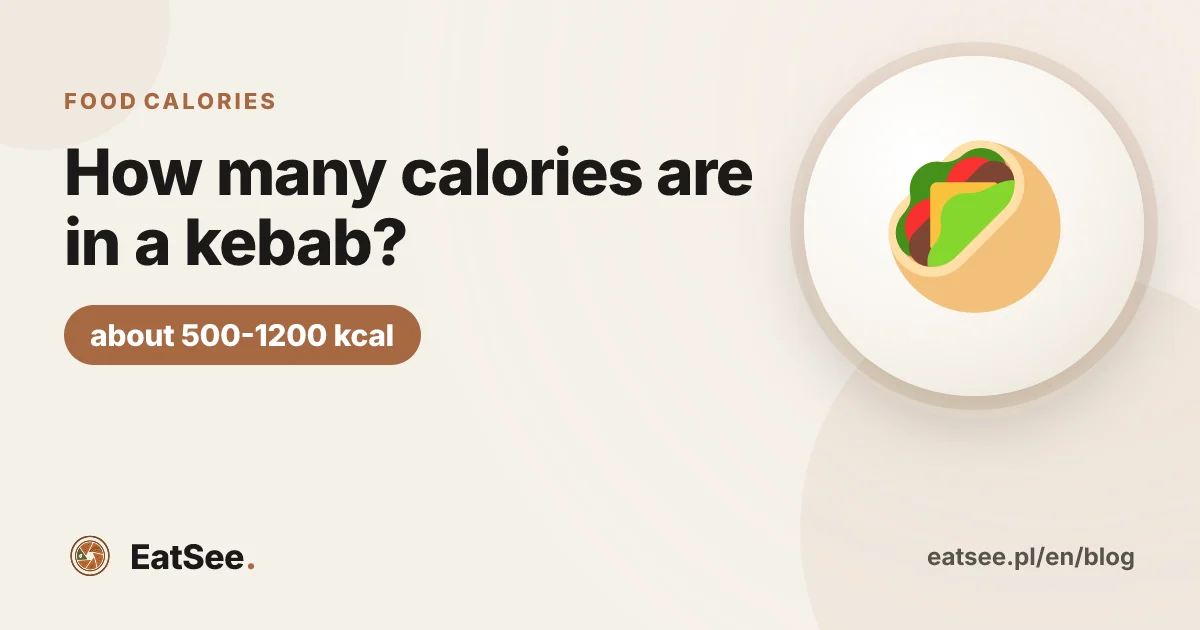
How many calories are in a kebab? A typical serving in a bun contains about 600-900 kcal, one in a tortilla about 500-800 kcal, and a version with fries on a plate or in a box often has about 700-1200 kcal. Serving size, type of meat, amount of sauce, and the starchy side make the biggest difference—the dish’s name alone isn’t enough to determine the calorie count accurately.
How many calories are in a kebab in a bun, tortilla, or on a plate?
Kebab doesn’t have one standard recipe or serving weight. At one place, you might get a small tortilla with plenty of vegetables; at another, a generously stuffed bun with extra sauce. The ranges below are estimates for typical servings; a large order may fall outside them.
| Type of kebab | Estimated calories |
|---|---|
| Kebab in a bun | about 600-900 kcal |
| Kebab in a tortilla | about 500-800 kcal |
| Kebab on a plate with rice and salad | about 600-900 kcal |
| Kebab on a plate with fries and salad | about 800-1200 kcal |
| Kebab box with fries | about 700-1100 kcal |
| Kebab box with rice and vegetables | about 550-850 kcal |
The ranges overlap because the way a kebab is served doesn’t determine its calorie count. A small bun with leaner meat and a modest amount of sauce may have fewer calories than a large tortilla packed with toppings. And “on a plate” doesn’t always mean lighter—especially if it comes with a large serving of fries.
What has the biggest impact on a kebab’s calorie count?
It’s easiest to lose track of the calories in toppings that take up little space at first glance. Sauce, extra meat, or fries can add more calories than a generous serving of vegetables.
- Serving size. More meat, a larger bun, and an extra serving of fries can quickly change the total. Pay attention to the size of your order, not just its name on the menu.
- Sauce. A creamy sauce made with mayonnaise or oil can have far more calories than a light yogurt sauce. The amount matters too—a “little extra” at a restaurant can mean a generous serving.
- Meat. Chicken is often leaner than a fattier meat blend, but the recipe, cut of meat, and cooking method all matter. The type of meat alone doesn’t guarantee that a serving will have fewer calories.
- Side. Fries usually have more calories than a similar volume of vegetables, and rice and bread contain calories too. You don’t have to cut them out—just account for them as part of the whole meal.
- Extras. Cheese, extra meat, or double sauce can be easy to overlook when estimating, even though they can noticeably increase the total.
Vegetables such as cabbage, tomato, and cucumber usually make up a small share of a serving’s calories. They can add volume and crunch, though, so a kebab doesn’t have to be dominated by meat and sauce.
How many calories are in kebab sauces?
Sauce can be hard to estimate because its ingredients and serving size vary widely from place to place. As a guide, about 30 g of sauce may contain:
| Type of sauce | Estimated calories in a serving of about 30 g |
|---|---|
| Creamy, mayonnaise-based, or oil-based | about 80-200 kcal |
| Yogurt-based, lighter | about 20-60 kcal |
| Tomato-based or spicy | about 10-80 kcal |
These are broad ranges because a sauce called “spicy” may be light, but it may also contain a lot of oil. If you’re not sure what’s in it, the easiest option is to ask for the sauce on the side or request a smaller amount. That way, you decide how much to add.
Kebab in a bun or tortilla—which has fewer calories?
A tortilla often works out lighter, but there’s no guarantee. A thin wrap may weigh less than a bun, but if the tortilla is larger and has lots of meat and a generous serving of sauce, it may have as many calories as a kebab in bread—or more.
The same goes for meat: choosing chicken instead of a fattier blend may reduce the calorie count, but serving size and preparation matter too. If you have a particular choice in mind, ask about the size, sauce, and toppings. In practice, this information can be more useful than the label “chicken” or “beef” alone.
How can you enjoy a lighter kebab without giving it up?
You don’t have to turn ordering into a research project or cut out every topping. A few simple changes can make it easier to match your serving to your appetite and your day:
- Choose a smaller size if you usually don’t finish a large serving or simply aren’t that hungry.
- Ask for the sauce on the side or for less of it. That way, you can add as much as you really like.
- Add more vegetables if the restaurant offers that option. You can still choose bread, rice, or fries—there’s no one required version of a “light” kebab.
- Decide which side matters most to you. If you choose fries, you don’t have to get extra bread; if you want a bun, you can ask for fewer fries.
- Split a larger serving if that works for you. You can save the rest for later instead of finishing it just because it’s on your plate.
A lighter choice doesn’t mean your kebab has to be without sauce, bread, or your favorite extra. It’s more about choosing a combination that feels good and suits your appetite.
How can you estimate the calories in a kebab?
When you know what’s in it, you can think of the meal as a few components: bread or rice, meat, vegetables, sauce, and possibly fries. A tortilla, for example, might contain about 210 kcal from the wrap, 300 kcal from the meat, 30 kcal from the vegetables, and 120 kcal from the sauce. That adds up to about 660 kcal. This is an example calculation, not a fixed value for every tortilla.
If you don’t know the weight, choose a range from the table and consider whether the serving was small, typical, or large. Make sure to include the sauce and toppings too—they’re a common reason why an estimate made by eye differs from the meal’s actual composition. For more practical tips, see our guide on how to estimate a serving without a scale and our article on how to count calories.
You can also enter the meal’s ingredients in a sentence or use a photo. EatSee then estimates the calories and macronutrients, and you can adjust the result by changing the serving size or an ingredient. It’s a useful starting point, but sauce and serving size can still be difficult to estimate for a kebab.
One kebab doesn’t determine whether you lose weight, maintain your weight, or build muscle. What matters is everything you eat over time and, for weight loss, a reasonable calorie deficit you can maintain. To better understand how it works, read about how a calorie deficit works.
FAQs
How many calories are in a kebab in a bun?
How many calories are in a kebab in a tortilla?
Does a kebab in a tortilla have fewer calories than one in a bun?
How many calories are in a kebab box with fries?
Does kebab make you gain weight?
How can you reduce the calories in a kebab?
This article is for informational purposes and does not replace advice from a doctor or dietitian. Nutrition information is approximate—it depends on the variety, brand, and preparation method. Check the product packaging for exact information. This article was prepared by the EatSee editorial team. Editorial policy.