 EatSee
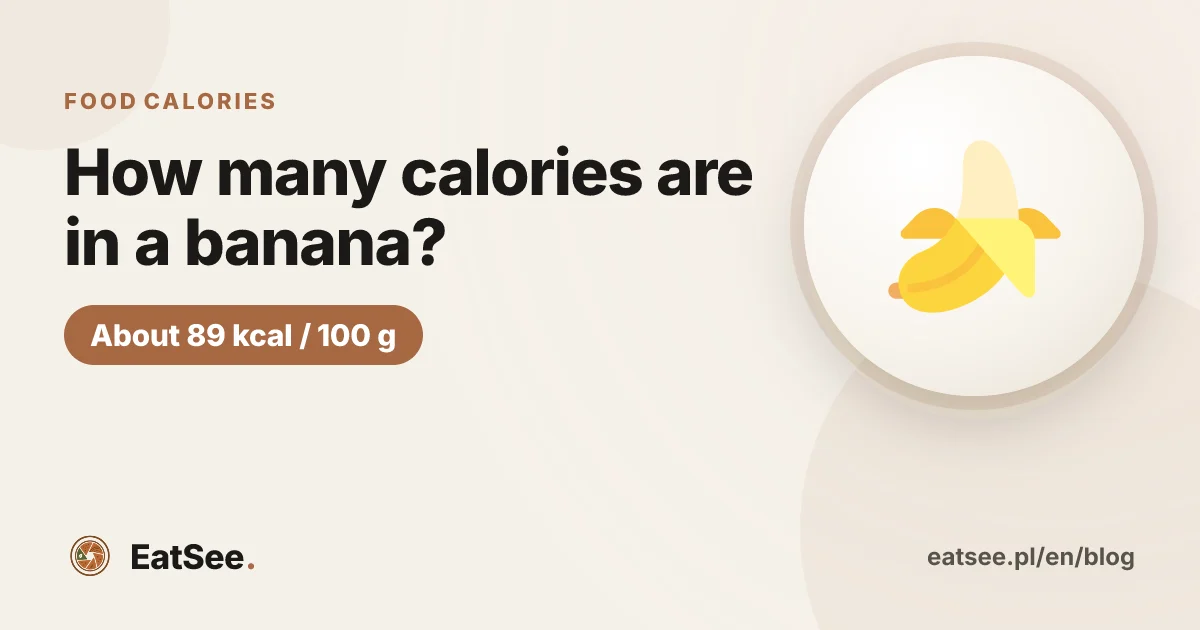
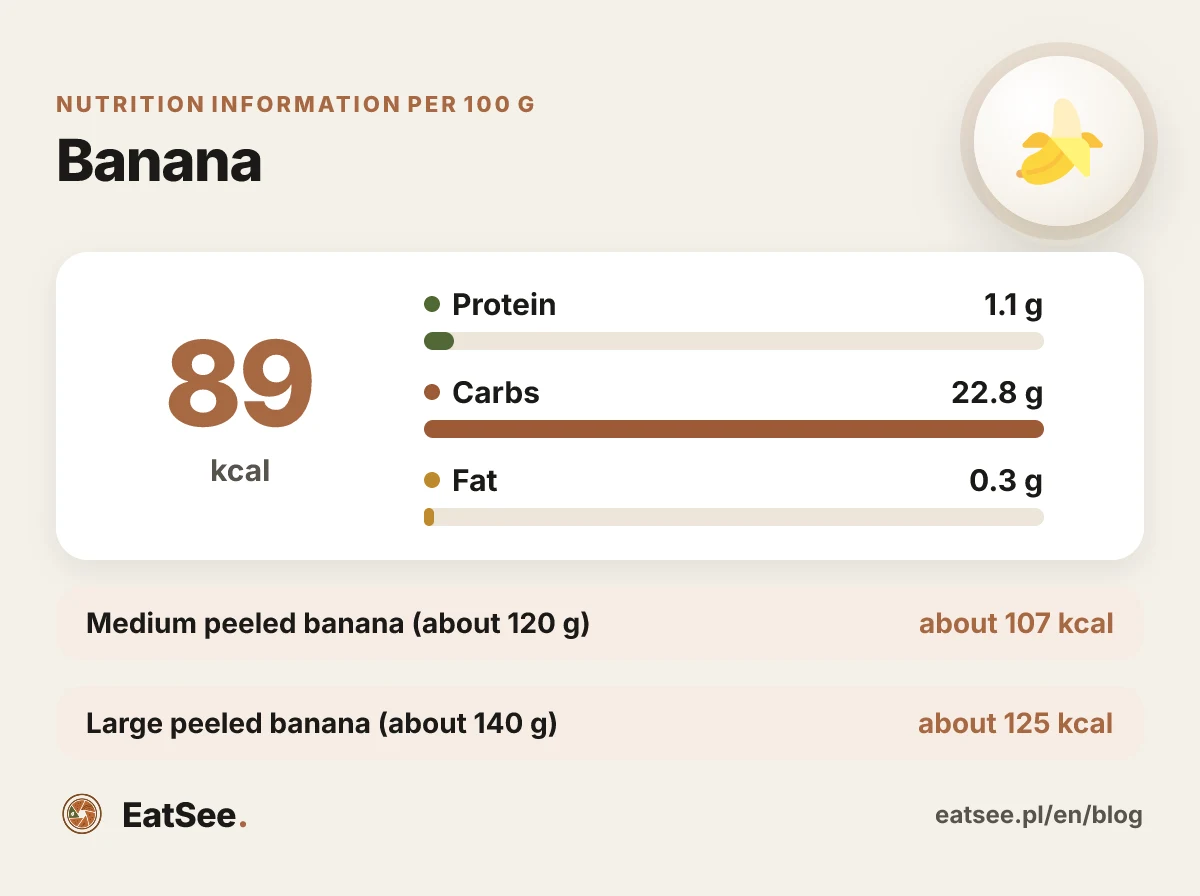
A banana has about 89 kcal per 100 g of flesh. A medium peeled banana weighs about 120 g, so it contains about 105-110 kcal. It's one of the most filling fruits per serving—it contains plenty of carbs, some fiber, and almost no fat.
Below, you'll find the calories in a banana per 100 g and per fruit, its macros, a comparison with other fruit, and the answer to the most common question: do bananas cause weight gain? Spoiler: not on their own.
- Medium peeled banana (about 120 g)about 107 kcal
- Large peeled banana (about 140 g)about 125 kcal
How many calories are in 100 g of banana?
The nutrition information for 100 g of ripe banana flesh looks roughly like this:
| Nutrient | Per 100 g of banana |
|---|---|
| Energy | about 89 kcal |
| Carbs | about 22.8 g |
| of which sugars | about 12.2 g |
| Fiber | about 2.6 g |
| Protein | about 1.1 g |
| Fat | about 0.3 g |
| Potassium | about 360 mg |
Almost all the calories in a banana come from carbs. That's why it provides a quick energy boost, but it's not a great source of protein.
Different charts list values ranging from about 89 to about 95 kcal per 100 g. Differences are due to the variety, ripeness, and testing method—any of these figures is accurate enough for everyday calorie tracking.
How many calories are in one banana?
The calories in one banana depend mainly on its size. The weight of the flesh matters because the peel makes up about 35% of the whole fruit's weight.
| Banana | Weight without peel | Calories |
|---|---|---|
| Small | about 100 g | about 90 kcal |
| Medium | about 120 g | about 105-110 kcal |
| Large | about 140 g | about 125 kcal |
| Extra large | about 150 g | about 135 kcal |
If you weigh a banana with the peel on, subtract about one-third of its weight. For example, a fruit weighing 180 g whole has about 120 g of flesh.
Does a banana's ripeness change its calories?
Greenish and ripe bananas have very similar calorie counts. What changes is the type of carbs:
- A greenish banana has more starch, including resistant starch, which is digested more slowly,
- A ripe banana with brown spots has more simple sugars, so it's sweeter and raises blood sugar faster.
If you want to feel full for longer, choose slightly underripe bananas or eat a banana with a source of protein, such as plain yogurt or skyr.
How many calories are in dried bananas, banana chips, and banana smoothies?
Fresh bananas aren't the same as processed banana products. These are the options where calories add up fastest:
- Dried banana: about 340-350 kcal per 100 g—calories become concentrated as the water evaporates, and a handful is easier to eat quickly than a whole fruit,
- Banana chips: about 500-520 kcal per 100 g because they're usually fried in oil and often sweetened,
- Banana and milk smoothie: a medium banana and a cup of 2% milk (250 ml) contain about 230 kcal in total.
It's easiest to misjudge dried fruit and chips. Check the calorie content on the label and weigh your serving, or simply scan the barcode.
Bananas compared with other fruit
Bananas are among the more calorie-dense fruits, but the differences aren't large for typical servings.
| Fruit (100 g) | Calories |
|---|---|
| Strawberries | about 32 kcal |
| Orange | about 47 kcal |
| Apple | about 52 kcal |
| Pear | about 57 kcal |
| Mango | about 60 kcal |
| Kiwi | about 61 kcal |
| Grapes | about 69 kcal |
| Banana | about 89 kcal |
If you want a larger portion for the same calories, strawberries or an apple are better choices. But bananas are easier to toss in a bag and more filling before a workout.
Do bananas cause weight gain?
A banana is no more fattening than any other food with a similar calorie content. You gain weight when you consistently eat more calories than you burn over time, regardless of whether they come from bananas, bread, or sweets.
A medium banana has about 105-110 kcal, which is less than most candy bars, sweet rolls, or servings of chips. It also contains fiber and potassium, and its volume makes it more filling than sweets with the same calorie content. If you’re trying to lose weight, a banana can easily fit into your calorie deficit—just make sure to count it.
When should you eat a banana while dieting?
Bananas fit into most eating patterns. They work especially well:
- Before a workout—easily digested carbs provide energy for exercise.
- As a sweet snack—it can replace a candy bar with a similar or higher calorie count.
- In oatmeal or a smoothie—adds sweetness without added sugar.
- With protein—a banana with skyr, plain yogurt, or peanut butter keeps you full for longer.
People with diabetes or insulin resistance don’t need to avoid bananas, but it’s a good idea to discuss portion size and what to pair them with with a doctor or dietitian.
How to quickly count the calories in a banana
The simplest methods, starting with the most accurate:
- Weigh the peeled fruit and multiply its weight by 0.89 to get the calories.
- Estimate based on its size using the chart above if you don’t have a scale handy.
- Take a photo—EatSee will recognize the banana, estimate the serving, and log the calories and macros in your food diary. Read about how it works and when you might need to add details in our article on whether photo calorie tracking works.
For chocolate-covered bananas, banana bread, or smoothies from a café, count the whole product, not just the fruit. In those cases, it’s best to check the label or count all the ingredients. And if you’re just getting started with calorie tracking, check out our guide on how to count calories.
FAQs
How many calories are in a banana with the peel on?
Do bananas make you gain weight?
How many calories are in dried bananas and banana chips?
Can you eat bananas while trying to lose weight?
How much does a peeled banana weigh?
This article is for informational purposes and does not replace advice from a doctor or dietitian. Nutrition information is approximate—it depends on the variety, brand, and preparation method. Check the product packaging for exact information. This article was prepared by the EatSee editorial team. Editorial policy.