 EatSee
How many calories are in potatoes? Plain boiled potatoes have about 86 kcal per 100 g, and a 200 g serving provides about 172 kcal. Potatoes baked without fat have about 93 kcal per 100 g, mashed potatoes usually have 110-130 kcal, and fries about 280-330 kcal. The main difference comes from how they’re prepared and how much fat is added.
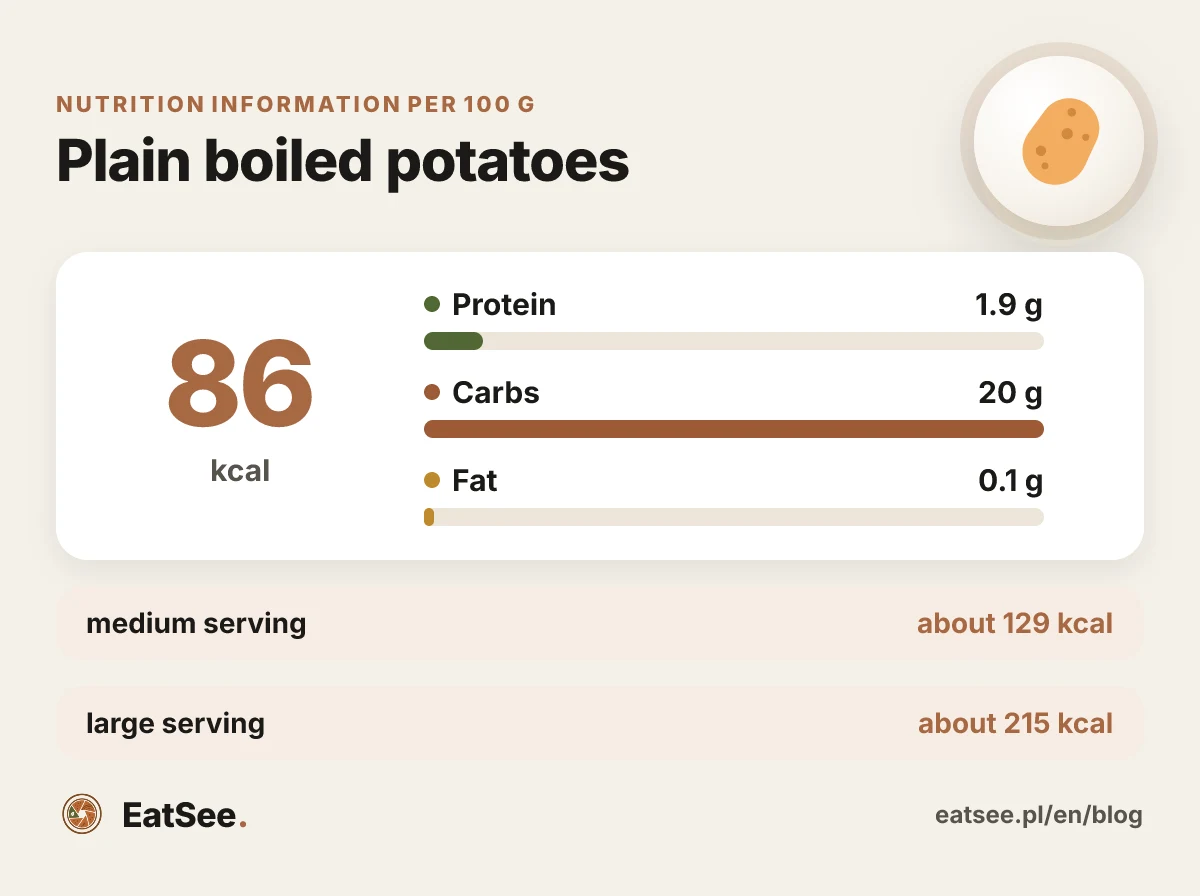
- medium servingabout 129 kcal
- large servingabout 215 kcal
How many calories are in 100 g of potatoes?
Calories depend on whether the potatoes are raw, boiled, mashed with butter, or fried. The values below can help you compare popular preparations and estimate a serving.
| Type of potato | Calories per 100 g | Example serving | Calories per serving |
|---|---|---|---|
| Raw | about 77 kcal | 200 g | about 154 kcal |
| Boiled, plain | about 86 kcal | 200 g | about 172 kcal |
| New potatoes, boiled | about 75-90 kcal | 200 g | about 150-180 kcal |
| Baked, without fat | about 93 kcal | 250 g | about 233 kcal |
| Mashed potatoes with milk and butter | about 110-130 kcal | 200 g | about 220-260 kcal |
| Fries | about 280-330 kcal | 150 g | about 420-495 kcal |
| Oven-roasted potatoes with oil | about 150-220 kcal | 200 g | about 300-440 kcal |
These are estimates—the variety, water content after boiling, mashed potato recipe, and amount of oil absorbed can all affect the result. For comparison, boiled potatoes have about 86 kcal per 100 g, while raw potatoes have about 77 kcal per 100 g.
In 100 g of boiled potatoes, you’ll also find about 1.9 g of protein, 20 g of carbs, 0.1 g of fat, and 1.8 g of fiber. Most of their energy comes from carbs, and they naturally contain very little fat.
Boiled or baked—which potatoes have fewer calories?
Plain boiled potatoes and potatoes baked without fat have fairly similar calorie counts. However, the values in a chart may differ because water changes the food’s weight during boiling or baking. So 100 g of cooked potatoes won’t necessarily have the same number of calories as 100 g of raw potatoes.
Plain boiled potatoes are easy to track: weigh your cooked serving and multiply its weight by the value per 100 g. For example, 250 g of boiled potatoes is about 215 kcal. If you add butter, oil, or sauce, count those ingredients separately.
Potatoes baked without oil have about 93 kcal per 100 g. Adding fat increases the calorie content: 5 g of oil has about 45 kcal, while 10 g has about 90 kcal. When baking potatoes for several people, it’s easy to lose track of how much oil went onto the tray, so it’s best to measure it before using it.
How many calories are in mashed potatoes and fries?
Mashed potatoes don’t have one fixed calorie value because recipes can vary a lot. Potatoes made with a little milk will be lighter than a version with more butter, cream, or cheese. For typical mashed potatoes with milk and butter, you can estimate about 110-130 kcal per 100 g, but a homemade recipe may fall outside this range.
Fries are noticeably higher in calories than boiled potatoes because they absorb fat during frying. A 150 g serving may have about 420-495 kcal. Oven-baked fries aren’t always low in calories either—if you coat them with plenty of oil, their calorie content can quickly approach that of fried fries.
That doesn’t mean you need to cut mashed potatoes or fries from your Friday dinner. Just track the specific version of the dish rather than treating all potatoes as the same food. You can compare potatoes with other vegetables in a vegetable calorie chart.
Are new potatoes lower in calories?
New potatoes usually have a similar, and sometimes slightly lower, calorie content than other boiled potatoes. They often contain more water, but there’s no single value that applies to every variety and cooking method. A reasonable estimate is about 75-90 kcal per 100 g.
They’re often served with dill, a fried egg, kefir, or butter. Potatoes on their own may be low in calories, but a serving of butter or a rich sauce changes the calorie count of the whole plate. To compare additions, count them separately—it’s then easier to see where the calories come from.
Do potatoes cause weight gain?
No, potatoes themselves don’t cause weight gain. Changes in body weight depend on your overall energy balance over time, not on one food at dinner. Plain boiled potatoes have a moderate calorie content, so they can easily fit into your daily meal plan.
What often makes more of a difference is what you serve them with and how you prepare them. Boiled potatoes with cottage cheese and a salad are a different meal from a large serving of fries with mayonnaise. But you don’t have to treat any version as off-limits—choose a serving size and sides that work for your day.
If you want to lose weight, you don’t have to cut potatoes out of your diet. You can serve them with vegetables and a source of protein, and adjust the amount of butter, oil, or sauce to suit your goal. It can also help to look at the whole plate instead of focusing only on the starchy side.
How do you count the calories in the potatoes on your plate?
The key is to weigh the food in the same state as the one listed in the chart. If you’re tracking boiled potatoes, select the value for boiled potatoes and weigh them after cooking. Don’t mix the weight of raw potatoes with the calorie value for boiled ones—water changes their weight, so the result may be off.
You can use this simple formula: calories per 100 g × serving weight / 100. For 200 g of boiled potatoes, it looks like this: 86 × 200 / 100 = 172 kcal. Then add the calories from butter, oil, sauce, or any other ingredients you actually ate.
When cooking for your family, weigh your serving on the plate or divide the whole batch into equal servings. At a restaurant, you usually won’t know the exact ingredients, so treat the result as an estimate rather than an exact-to-the-gram measurement. Knowing how to count calories step by step can also help when a meal includes several sides.
If you’d rather estimate your whole plate more quickly, EatSee lets you add a meal from a photo or describe it in a sentence, then adjust the serving size or ingredients. The result is an estimate, so for a home-cooked meal, it’s worth specifying whether the potatoes were boiled, baked, or dressed with fat. Read more about how photo calorie tracking works on the app page.
FAQs
How many calories are in 100 g of boiled potatoes?
How many calories are in a serving of potatoes?
Do potatoes cause weight gain?
How many calories are in fries?
Are new potatoes lower in calories?
This article is for informational purposes and does not replace advice from a doctor or dietitian. Nutrition information is approximate—it depends on the variety, brand, and preparation method. Check the product packaging for exact information. This article was prepared by the EatSee editorial team. Editorial policy.