 EatSee
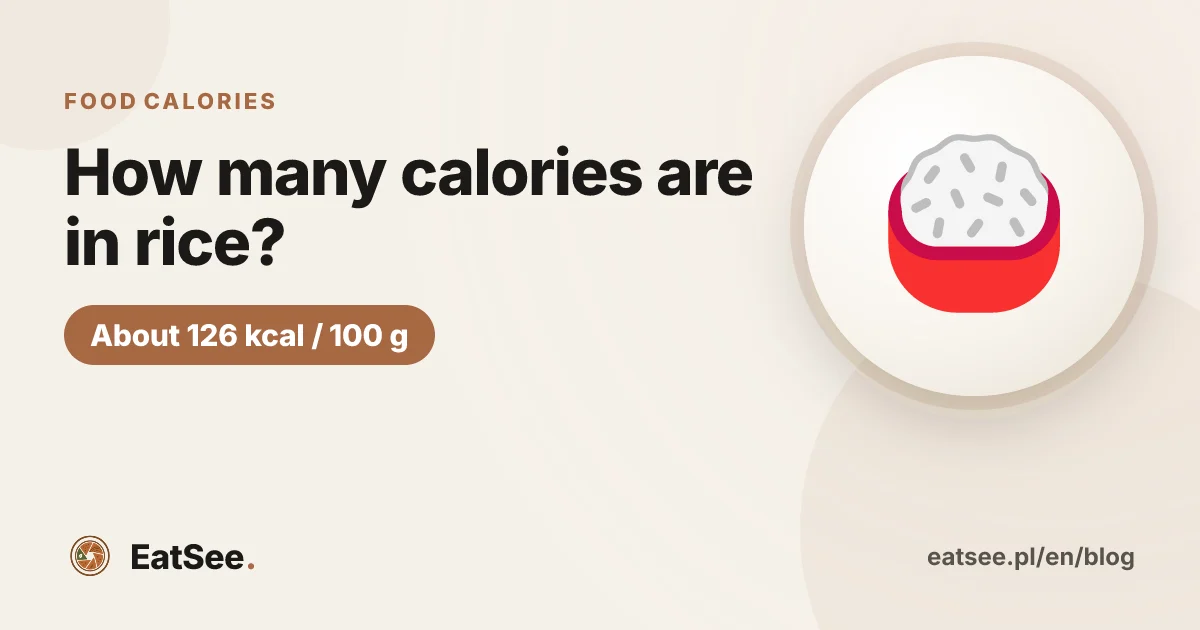
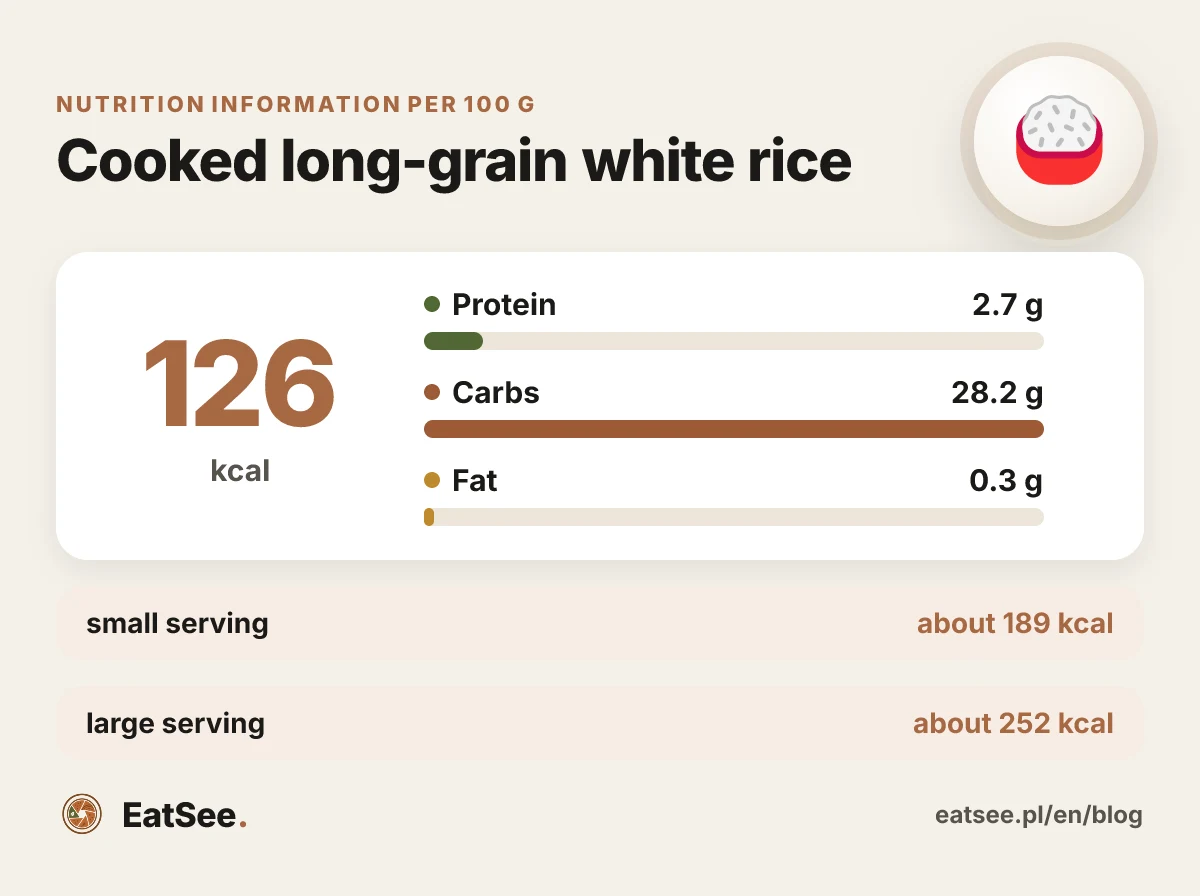
How many calories are in rice? It mainly depends on whether you weigh it before or after cooking: 100 g of dry white rice has about 365 kcal, while 100 g of cooked rice has about 126 kcal. Rice absorbs water, which increases its weight but adds no calories. The type of rice and serving size matter too, although the differences between varieties are usually smaller than the difference between dry and cooked rice.
- small servingabout 189 kcal
- large servingabout 252 kcal
How many calories are in dry rice versus cooked rice?
The simplest rule to remember: dry grains have far more calories per 100 g because they don't contain the water that rice absorbs during cooking. When you cook 100 g of dry rice, you'll usually get about 250-300 g of cooked rice. The calories in that serving don't disappear—they're spread over a greater weight.
| White rice | Calories in 100 g, dry | Calories in 100 g, cooked |
|---|---|---|
| Long-grain | about 365 kcal | about 126 kcal |
| Basmati | about 356 kcal | about 121 kcal |
| Jasmine | about 360 kcal | about 129 kcal |
Values for cooked rice are estimates. They depend on the variety, cooking time, and how much water the grains absorb. That's why product labels most often list values for dry rice—and you can't compare them directly with 100 g of rice already on your plate.
If you weigh ingredients, it's easiest to always weigh them in the same state: either before or after cooking. When tracking calories, also check whether you're logging dry or cooked rice. For more on sticking to one method, read our guide to how to count calories step by step.
How many calories are in white, brown, basmati, and jasmine rice?
The calorie counts of different types of rice are similar. The amount of water absorbed during cooking often affects the result more than the variety itself. The table below shows approximate values per 100 g of product—dry or cooked, depending on the column.
| Type of rice | Dry, 100 g | Cooked, 100 g |
|---|---|---|
| Long-grain white | about 365 kcal | about 126 kcal |
| Brown | about 370 kcal | about 123 kcal |
| Basmati | about 356 kcal | about 121 kcal |
| Jasmine | about 360 kcal | about 129 kcal |
Brown rice retains the grain's outer layer and usually provides more fiber than white rice. However, that doesn't mean it has far fewer calories—per 100 g cooked, the values are similar. Basmati and jasmine rice aren't automatically “diet” versions of rice either; they may simply differ in aroma, texture, and how much water they absorb during cooking.
Don't focus too much on a single calorie value in a chart. Values may vary depending on the manufacturer and preparation method. For a more precise estimate for a specific package, check the label and see whether the values are for dry rice.
How many calories are in a serving of rice or a bag of rice?
A typical serving of cooked rice with a meal may weigh about 150-200 g. Using an estimate of about 126 kcal per 100 g, white rice provides about 189 or 252 kcal, respectively. That's for the rice alone—without butter, oil, sauce, or toppings.
| Serving of cooked white rice | Calories |
|---|---|
| 100 g | about 126 kcal |
| 150 g | about 189 kcal |
| 200 g | about 252 kcal |
| 250 g | about 315 kcal |
What about rice in a bag? If the bag contains 100 g of dry rice, it has about 365 kcal before cooking. After cooking, its contents may weigh roughly 250-300 g, but the total calories in the serving remain about the same. Only the calories per 100 g of cooked rice change.
If you cook a whole bag and eat half, you'll also eat roughly half the calories in it. If you're measuring rice from a larger package, weigh the dry serving before cooking, or weigh it after cooking and select cooked rice in your calorie tracker. If you're portioning it without a scale, try this simple way to estimate a serving.
Why can the calorie count for rice vary after cooking?
Cooked rice can weigh different amounts even when you start with the same quantity of dry grains. One serving may absorb more water, another less. As a result, 100 g of wetter rice may have fewer calories than 100 g of fluffy cooked rice—even if both were made from a similar amount of dry rice.
Additions also affect the final calories in the whole dish. A tablespoon of fat used for frying, a creamy sauce, or a handful of nuts can add more calories than choosing white instead of brown rice. Vegetables, a lean protein source, and a simple sauce can help make a filling meal without overcomplicating things.
It's also worth distinguishing the calories in rice itself from those in the whole dish. Rice with vegetables and chicken, butter-based risotto, and rice with sweet and sour sauce are three different meals, even if they each contain a similar serving of rice. If you're tracking calories, log the added ingredients, not just the base.
Can rice fit into a weight loss plan?
Yes—rice can be part of a meal plan while you're trying to lose weight. Rice itself doesn't cause weight gain; what matters is your energy balance over time and your serving size. So there's no need to give up rice at your mom's for lunch or a bowl of rice after a workout.
For a more filling meal, pair rice with a serving of protein and vegetables. Try fish, eggs, tofu, or chicken, with a side salad or pan-fried vegetables. Adjust your serving of rice to your appetite and your overall daily plan instead of treating it as a forbidden food.
If you want to lose weight, a moderate, sustainable calorie deficit is usually more helpful than cutting out individual foods. Find more practical tips in our article about the calorie deficit. If you have a medical condition, are pregnant or breastfeeding, or have a history of disordered eating, consider discussing your approach to eating with a doctor or dietitian.
How can you easily track calories in rice every day?
Choose one of these two methods and use it consistently:
- Weigh the rice before cooking — use the values for uncooked rice. This is convenient when you’re cooking a serving for one person or portioning out the dry grains before cooking.
- Weigh the rice after cooking — use the values for cooked rice. This is practical when you’re cooking a larger amount for several meals, but keep in mind that the amount of water absorbed affects the value per 100 g.
Also note whether you added oil or butter to the pot. If you cook rice without fat, don’t add any just in case; if you fry the grains first, include the ingredient you used. This small detail makes it easier to compare meals and avoid guesswork.
In EatSee, you can log a meal in a sentence or scan it from a photo, and the app will estimate its calories and macronutrients. You can adjust the result by changing the serving size or ingredients — useful when your meal includes more than just rice, such as sauce and toppings. Scan results are estimates, so for a weighed serving, the label and actual weight remain the more accurate reference.
FAQs
How many calories are in 100 g of cooked rice?
How many calories are in 100 g of uncooked rice?
How many calories are in a rice pouch?
Does brown rice have fewer calories than white rice?
Can you eat rice while trying to lose weight?
This article is for informational purposes and does not replace advice from a doctor or dietitian. Nutrition information is approximate—it depends on the variety, brand, and preparation method. Check the product packaging for exact information. This article was prepared by the EatSee editorial team. Editorial policy.