 EatSee
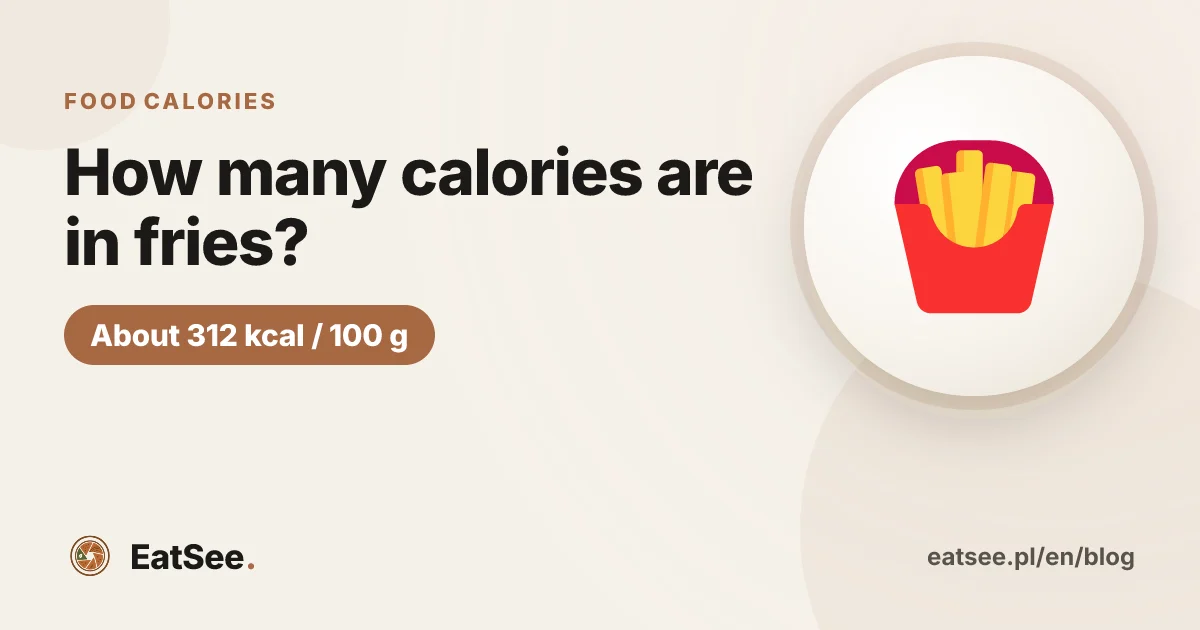
How many calories are in fries? It mainly depends on the serving size and the amount of fat used to prepare them: 100 g of fried fries contain about 312 kcal, while oven-baked fries contain about 172 kcal. A small fast-food serving may contain around 250 kcal, and a large one around 470 kcal. Air-fryer fries are usually lower in calories, but a lot depends on the product and any added oil.
How many calories are in 100 g of fries and a typical serving?
The easiest way to compare them is per 100 g, then calculate the amount for the serving you actually eat. The values in the table are estimates: the recipe, type of potato, and amount of oil all affect the calorie content, and fast-food serving sizes vary.
| Type of fries | Per 100 g | Example serving | Calories per serving |
|---|---|---|---|
| Deep-fried | about 312 kcal | 100 g | about 312 kcal |
| Oven-baked | about 172 kcal | 150 g | about 260 kcal |
| Air-fried | about 150-200 kcal | 150 g | about 225-300 kcal |
For fried fries, we use an estimate of about 312 kcal per 100 g, and for oven-baked fries, about 172 kcal. You can also check the information for fried fries and oven-baked fries.
The calculation is simple: multiply the calories per 100 g by the serving weight, then divide by 100. For example, 150 g of oven-baked fries is 172 × 1.5, or about 258 kcal-rounded to 260 kcal. To compare them with boiled or baked potatoes, read our article on how many calories are in potatoes.
How many calories are in a small or large serving of fast-food fries?
There’s no one-size-fits-all definition of a “small” or “large” serving. For a rough estimate, let’s say a small serving weighs 80 g and a large one 150 g. If both are fried and contain about 312 kcal per 100 g, that works out to about 250 kcal and 470 kcal, respectively.
An actual serving may weigh more or less. So, if the restaurant menu or app lists serving size and calories, those details are a better reference. The word “large” doesn’t tell you how many fries are in the carton-and, as we know, cartons don’t come with built-in scales.
Fries often come with a dip. A tablespoon of ketchup may add very little, but a larger serving of mayonnaise-based sauce can add noticeably more calories. So, if you’re counting the whole meal, include the sauce and drink-not just the fries.
Oven-baked fries vs. air-fryer fries
Oven-baked fries contain an estimated 172 kcal per 100 g. They usually have fewer calories than classic fried fries because they don’t absorb as much fat during cooking. Still, it matters whether you use a ready-made product or cut potatoes and add oil yourself.
Air-fryer fries are made with little or no fat. About 150-200 kcal per 100 g may be a reasonable estimate, but it won’t be the same for all fries. Frozen products vary in ingredients, and homemade fries with a little oil will have more calories than potatoes prepared without added fat.
A teaspoon of oil weighs about 5 g and provides roughly 45 kcal. If you add it to a serving for two, you can split that value in half and add about 23 kcal to your serving. It’s hard to divide the oil perfectly evenly, but this is a better estimate than leaving it out altogether.
Also, keep in mind that the package of frozen fries may list nutrition information for the product before cooking. Its weight changes during baking as some of the water evaporates. So don’t directly compare the calories listed for 100 g of frozen product with the weight of 100 g of cooked fries-check how the manufacturer defines a serving.
What affects the calorie content of fries the most?
Preparation method and serving size make the biggest difference. But there’s more to it. The final calorie count is also affected by:
- the amount of oil used for frying or baking;
- whether you use a ready-made product or fresh potatoes;
- the thickness of the fries and cooking time;
- sauce, toppings, or other extras;
- whether you weigh the fries before or after cooking.
Calories don’t tell you whether a meal is “good” or “bad.” Fries can be a side with your meal, and how they fit into your day depends on your overall meal plan and serving size. If you feel like having fries on Friday, you don’t need to “make up for them” with a workout or skip dinner.
How can you count calories in fries day to day?
At home, you can weigh your serving on the plate and match it to the information for that type of fries. If you’re making them from a recipe, include the oil too. If you’re sharing a large tray among several people, divide the calories in the ingredients by the number of servings-as long as the servings are roughly equal.
When eating out, use the serving size listed on the menu if it’s available. If it isn’t, enter an estimated serving and treat the result as an estimate, not a laboratory measurement. A simple way to count calories or a guide to estimating serving sizes without a scale may also help.
If you don’t want to enter ingredients by hand, EatSee can estimate calories and macronutrients from a meal photo, and you can adjust the result by changing the serving size. This can be useful for a plate of fries, a cutlet, and salad when you can’t weigh each ingredient separately. Just remember that photo-based results are estimates too.
Fries are easy to pair with different meals-sometimes as a side with lunch or dinner, sometimes as a snack with friends. If you’re planning your day around a specific calorie goal, you can check out a sample 2000 kcal meal plan. You don’t have to eat exactly as the plan suggests; use it as inspiration for spreading out meals and sides.
Can fries be part of your diet?
Yes. Your overall eating habits matter more than a single side dish. If you want to cut back on calories, choose a smaller serving, bake the fries or cook them in an air fryer with a little oil, and pair them with filling sides-for example, a source of protein and some vegetables.
You don’t always have to choose the lightest option, either. You can have fries at a restaurant and then simply get back to your usual eating routine. It’s more useful to estimate your serving realistically than to try to get the number exactly right down to the last calorie.
FAQs
How many calories are in 100 g of fries?
How many calories are in a small serving of fast-food fries?
How many calories are in a large serving of fries?
Are air-fried fries lower in calories than deep-fried fries?
Are oven-baked fries lower in calories than deep-fried fries?
This article is for informational purposes and does not replace advice from a doctor or dietitian. Nutrition information is approximate-it depends on the variety, brand, and preparation method. Check the product packaging for exact information. This article was prepared by the EatSee editorial team. Editorial policy.