 EatSee
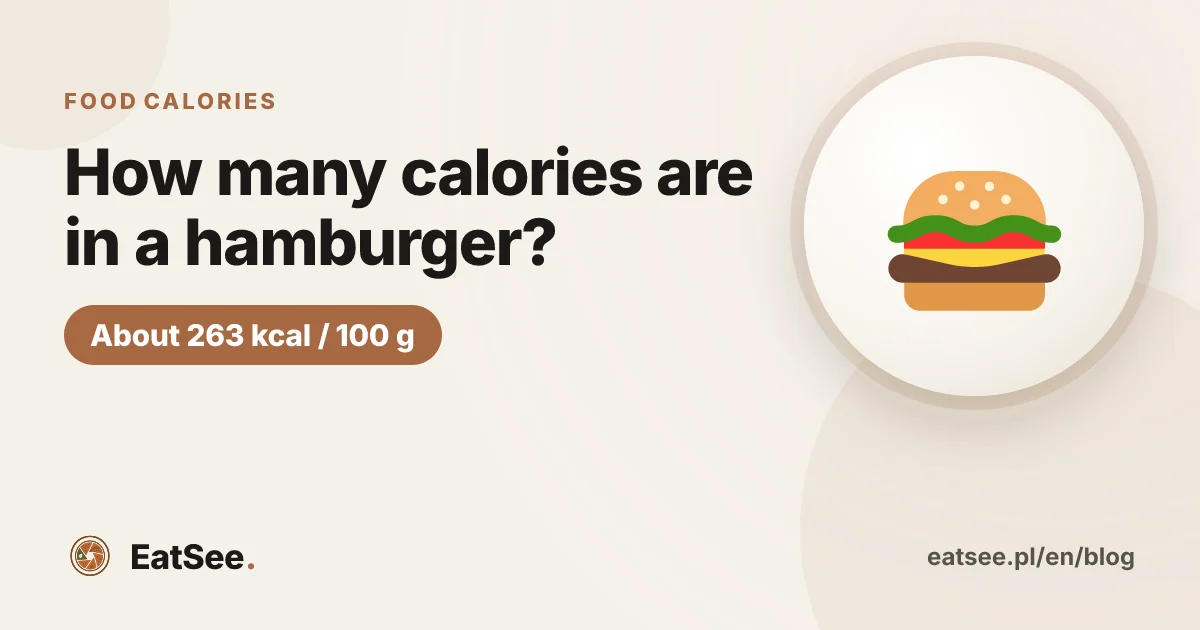
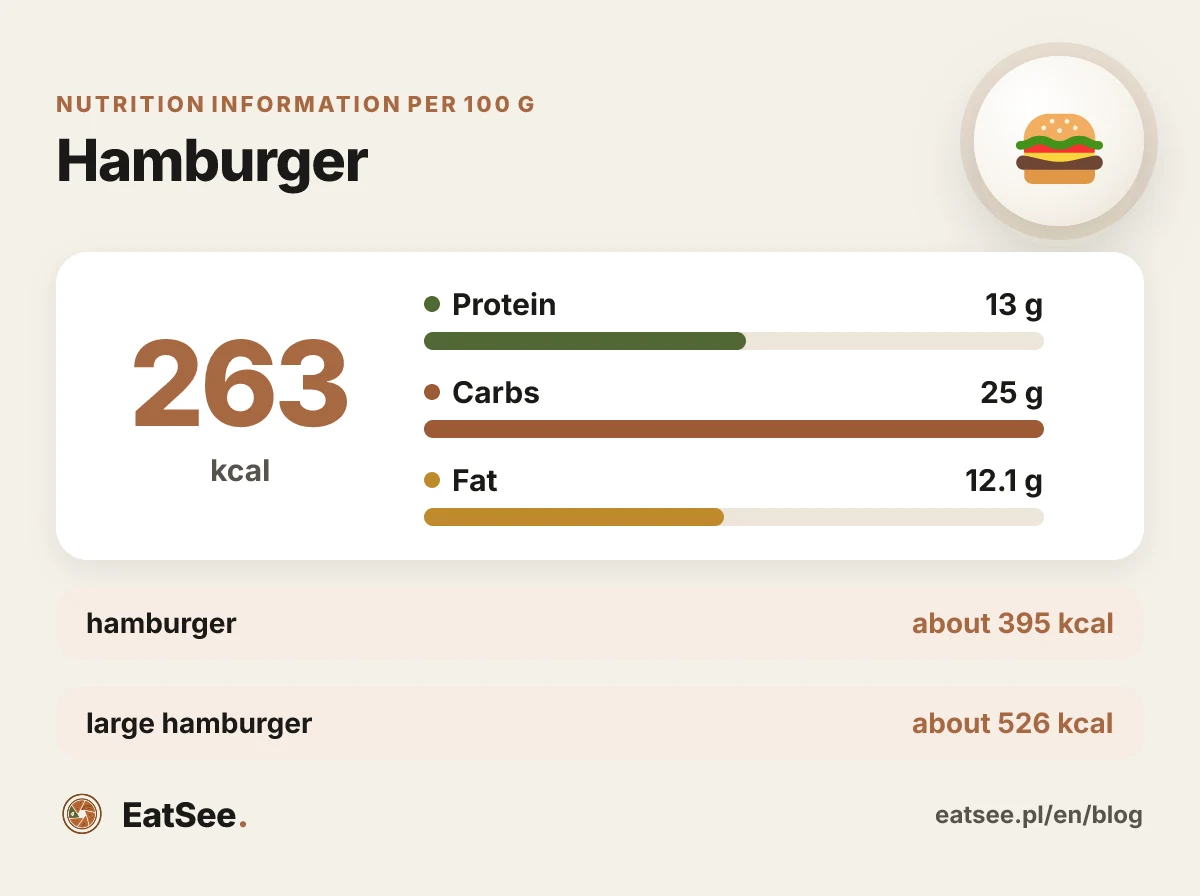
How many calories are in a hamburger? A classic hamburger has about 263 kcal per 100 g, so a 150 g serving provides about 395 kcal, while 200 g has about 526 kcal. A cheeseburger usually has more because of the cheese, while a homemade version may have either fewer or more calories. A meal with fries and a sweetened drink often exceeds 850 kcal.
- hamburgerabout 395 kcal
- large hamburgerabout 526 kcal
How many calories are in a typical serving of hamburger?
A useful starting point is the calorie count per 100 g. Our hamburger calorie chart uses about 263 kcal per 100 g. But that number doesn't tell you how many calories are in the sandwich you're holding: small and large burgers can differ in weight by dozens of grams.
| Hamburger serving | Estimated weight | Calories |
|---|---|---|
| Smaller hamburger | 100 g | about 263 kcal |
| Typical hamburger | 150 g | about 395 kcal |
| Larger hamburger | 200 g | about 526 kcal |
This calculation is for a hamburger with 263 kcal per 100 g. In practice, the result depends on the ingredients and weight, so a burger with a thicker patty or more sauce may come out differently. To compare it with other dishes, see the hamburger calorie chart or the calorie chart for dishes and fast food.
How many calories are in a cheeseburger?
A cheeseburger has an extra slice of cheese, and sometimes more sauce or a larger patty, too. That's why it's usually higher in calories than a hamburger of a similar size, although the name alone isn't enough to determine the exact calorie count.
| Type of sandwich | Example weight | Estimated calories |
|---|---|---|
| Classic hamburger | 150-200 g | about 395-526 kcal |
| Cheeseburger | 170-220 g | about 450-660 kcal |
The cheeseburger range is an illustrative estimate, not a value that applies to every sandwich. Cheese, fattier meat, a double patty, or extra sauce can quickly raise the calorie count. A smaller sandwich with one thin slice of cheese may have fewer calories than a large hamburger with generous toppings.
How many calories are in a homemade hamburger?
A homemade burger is easier to tailor to your appetite because you choose the patty size, bun, and toppings. For example, a 70 g bun may have about 190 kcal, a patty made with 100 g of cooked beef about 250 kcal, and the vegetables, ketchup, and a little cooking fat about 50 kcal in total. That sandwich comes to approximately 490 kcal.
Add a 20 g slice of cheese, and the example goes up by about 70 kcal, to approximately 560 kcal. The calories in the meat depend especially on its fat content and how much fat remains in the pan. The bun matters, too: a larger bun or one spread with butter can change the total more than its unassuming appearance might suggest.
If you make burgers at home, count the ingredients separately. Weigh the bun, patty, and cheese, and measure the sauce with a tablespoon or check its amount on the label. Vegetables usually add relatively few calories, but a mayonnaise-based sauce or an extra patty can noticeably change the total.
How many calories are in a hamburger with fries and a drink?
The burger is often only part of the order. Fries and a sweetened drink can add several hundred calories, so when you're having a meal, look at the whole order-not just the sandwich.
| Example meal | Estimated ingredients | Total |
|---|---|---|
| Smaller meal | hamburger 150 g (395 kcal), fries 100 g (about 310 kcal), drink 330 ml (about 140 kcal) | about 845 kcal |
| Larger meal | hamburger 200 g (526 kcal), fries 150 g (about 465 kcal), drink 500 ml (about 210 kcal) | about 1,200 kcal |
These are examples based on the portions listed, not a universal chart for every restaurant. Fries can vary in size and fat content, and a drink may be sweetened or sugar-free. Find out more about portions in the article how many calories are in fries.
What has the biggest impact on a hamburger's calories?
Four things usually matter: sandwich size, patty, sauce, and toppings. Even two burgers that look similar can have different calorie counts if one has a thin patty and plenty of vegetables, while the other has double meat, cheese, and a creamy sauce.
- Weight: a larger bun and patty mean a larger serving. At 263 kcal per 100 g, every additional 50 g of hamburger adds about 132 kcal.
- Meat: calories depend, among other things, on the type of meat and its fat content. The amount of fat used for cooking matters, too.
- Sauces and cheese: mayonnaise-based sauces and cheese add calories, even if they look like small additions to the sandwich.
- Meal: a serving of fries and a sweetened drink may have more calories than the sandwich itself.
If you're tracking calories, you don't need to break down every burger ingredient by ingredient. Log a realistic portion and include the highest-calorie toppings. A simple way to count calories may also help.
How can you estimate a hamburger's calories day to day?
At home, the best way to calculate a sandwich's calories is to use the ingredient weights and information on the packaging. When eating out, start with the burger size, then add the cheese, sauces, and toppings that actually came with it. If you don't know the exact weight, enter a reasonable estimate rather than assuming every sandwich is identical.
You can also add a meal to EatSee from a photo or with a single sentence. The app estimates calories and macronutrients, and you can adjust the result by changing the serving size or ingredients. It's still an estimate, not a gram-by-gram measurement. To try this approach, check out the photo calorie tracker.
A hamburger can easily be part of your regular meal plan. What matters is your overall eating and portion sizes throughout the day, not one sandwich. There's no need to “make up for” a burger by starving yourself-just go back to your usual meals.
FAQs
How many calories are in a 150 g hamburger?
How many calories are in a cheeseburger?
How many calories are in a homemade hamburger?
How many calories are in a hamburger with fries and a drink?
Does a hamburger cause weight gain?
This article is for informational purposes and does not replace advice from a doctor or dietitian. Nutrition information is approximate-it depends on the variety, brand, and preparation method. Check the product packaging for exact information. This article was prepared by the EatSee editorial team. Editorial policy.