 EatSee
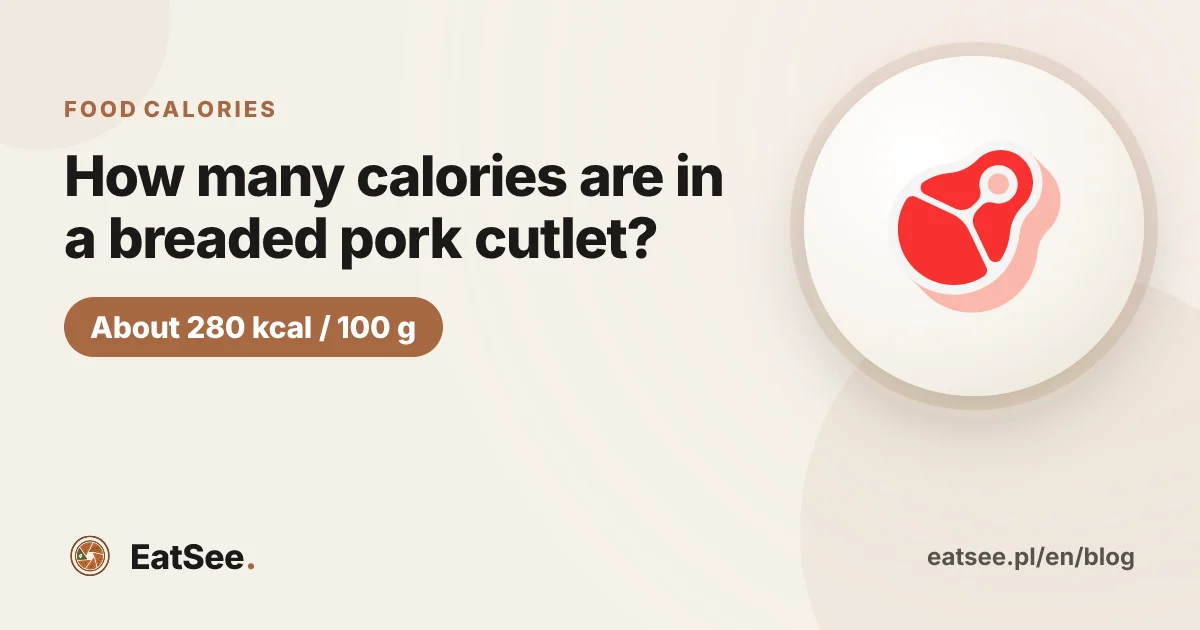
A fried, breaded pork cutlet has about 250-300 kcal per 100 g. So a medium cutlet (about 180 g) has about 450-540 kcal, and with potatoes and coleslaw, the whole meal usually comes to 750-900 kcal. The biggest difference comes not from the meat itself, but from the breading and the fat used for frying.
A breaded pork cutlet is a classic main meal, and there’s no reason to rule it out—even when you’re trying to lose weight. You just need to know how many calories it has and what affects that number.
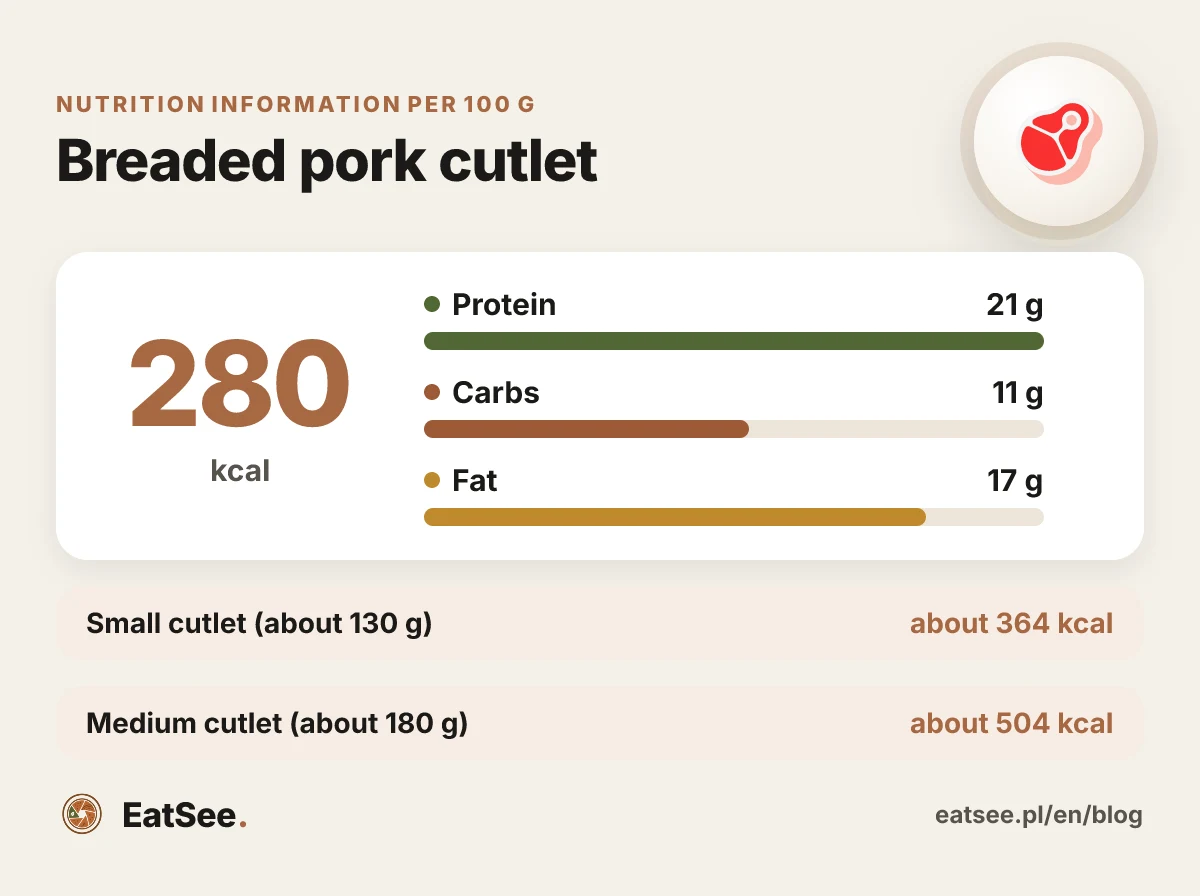
- Small cutlet (about 130 g)about 364 kcal
- Medium cutlet (about 180 g)about 504 kcal
How many calories are in 100 g of a breaded pork cutlet?
A 100 g fried breaded pork cutlet contains, on average:
| Nutrient | Per 100 g of cutlet |
|---|---|
| Energy | about 280 kcal (usually 250-300 kcal) |
| Protein | about 21 g |
| Carbs | about 11 g |
| Fat | about 17 g |
A classic breaded pork cutlet is made with pork loin, a relatively lean cut from the back of the pig. Raw pork loin has about 150-180 kcal per 100 g. The rest comes from the egg, flour, breadcrumbs, and, above all, the fat absorbed by the breading during frying.
Everyone makes a breaded pork cutlet a little differently, so the nutrition information varies from recipe to recipe. Treat these figures as a reasonable guide, not an exact calorie count.
How many calories are in one breaded pork cutlet?
| Cutlet | Weight after frying | Calories |
|---|---|---|
| Small | about 130 g | about 330-390 kcal |
| Medium | about 180 g | about 450-540 kcal |
| Large | about 220-250 g | about 550-750 kcal |
A large cutlet that takes up half the plate, like the kind you might get at a Polish milk bar or at your grandmother’s, can have as many calories as a whole meal with a smaller cutlet. Keep that in mind before ordering an XXL cutlet.
How many calories are in a breaded pork cutlet with potatoes and coleslaw?
A typical Polish meal looks something like this:
| On the plate | Serving | Calories |
|---|---|---|
| Breaded pork cutlet | medium, about 180 g | about 450-540 kcal |
| Boiled potatoes | about 250 g | about 200 kcal |
| Cabbage salad | about 150 g | about 80-150 kcal |
| Total | about 750-900 kcal |
A few extras that can add to the total:
- Butter or bacon bits on potatoes - a tablespoon of butter has about 110 kcal, and bacon bits add even more,
- Cucumber salad (mizeria) - a serving made with 18% sour cream (about 150 g) has about 60-90 kcal,
- Mayonnaise-based salad instead of one made with oil or yogurt - up to twice as many calories,
- Fruit compote - a cup of sweetened compote has about 80-120 kcal.
Add buttery potatoes, a large cutlet, and mayonnaise-based salad, and the meal can easily exceed 1000 kcal. That’s not a criticism, just useful information to know when planning the rest of your day.
What affects the calorie content of a breaded pork cutlet?
Two cutlets made from the same piece of pork loin can differ by as much as 100-150 kcal. Four things make the difference:
- Breading thickness - double breading (“egg - breadcrumbs - egg - breadcrumbs”) absorbs more fat.
- Amount of frying fat - a cutlet deep-fried in oil absorbs more fat than one fried in a tablespoon of oil in a well-heated pan. Lard, oil, and clarified butter have similar calorie contents, so the amount of fat matters more than the type.
- Cut of meat - a cutlet made with pork tenderloin will be leaner, while one made with pork neck will be noticeably fattier than a classic pork loin cutlet.
- How thin the meat is pounded - a thin cutlet has a larger surface area, so each gram of meat gets more breading and absorbs more fat.
How can you estimate the calories in a breaded pork cutlet without weighing it?
You don’t need to weigh your cutlet to get a rough idea of how many calories it has:
- a cutlet about the size of your palm (not including your fingers) — about 130–160 g, or about 350–450 kcal,
- a cutlet slightly larger than your palm — about 180 g, or about 500 kcal,
- a cutlet covering half the plate — about 230–250 g, or about 650–700 kcal.
Using a photo is even quicker: EatSee’s AI recognizes Polish dishes, so it can identify breaded pork cutlet (schabowy), potatoes, and slaw, estimate the portions, and calculate the whole meal. Just add a note if the cutlet was fried in a lot of fat or the potatoes were topped with fried fat. Find more tips in our guide on how to estimate a serving without a scale.
Can you eat breaded pork cutlet while losing weight?
Absolutely. Schabowy is mainly a good source of protein — an average cutlet contains about 35–40 g, which is a substantial part of your daily needs (read more in our article on how much protein you need per day). You just need to fit it into your calorie deficit.
Here are a few ways to make it lighter while keeping that classic schabowy flavor:
- fry it in a tablespoon of oil in a well-heated pan, then drain the cutlet on a paper towel,
- cook it in an air fryer or oven — it comes to about 200–250 kcal per 100 g,
- skip the double coating,
- add more slaw and fewer potatoes, or skip the fried-fat topping,
- choose a smaller cutlet — the difference between a small and large one can be about 300 kcal.
And if Sunday schabowy is non-negotiable, just plan for it. A lighter breakfast and dinner will leave room for it.
Unbreaded pork cutlet and other cutlets
For comparison, per 100 g:
| Type | Calories per 100 g |
|---|---|
| Fried breaded pork cutlet (schabowy) | about 250-300 kcal |
| Air-fried breaded pork cutlet (schabowy) | about 200-250 kcal |
| Pork loin without breading, pan-fried in a little fat or baked | about 170-220 kcal |
| Fried breaded chicken breast cutlet | about 230-260 kcal |
| Grilled chicken breast, without breading | about 150-165 kcal |
The biggest difference comes from the breading and frying, not whether the cutlet is made with pork or chicken.
FAQs
How many calories are in a breaded pork cutlet with potatoes and slaw?
How many calories are in a pork cutlet without breading?
How much protein is in a breaded pork cutlet?
Can you eat a breaded pork cutlet while dieting?
Which has fewer calories: a breaded pork cutlet or a chicken cutlet?
This article is for informational purposes and does not replace advice from a doctor or dietitian. Nutrition information is approximate—it depends on the variety, brand, and preparation method. Check the product packaging for exact information. This article was prepared by the EatSee editorial team. Editorial policy.