 EatSee
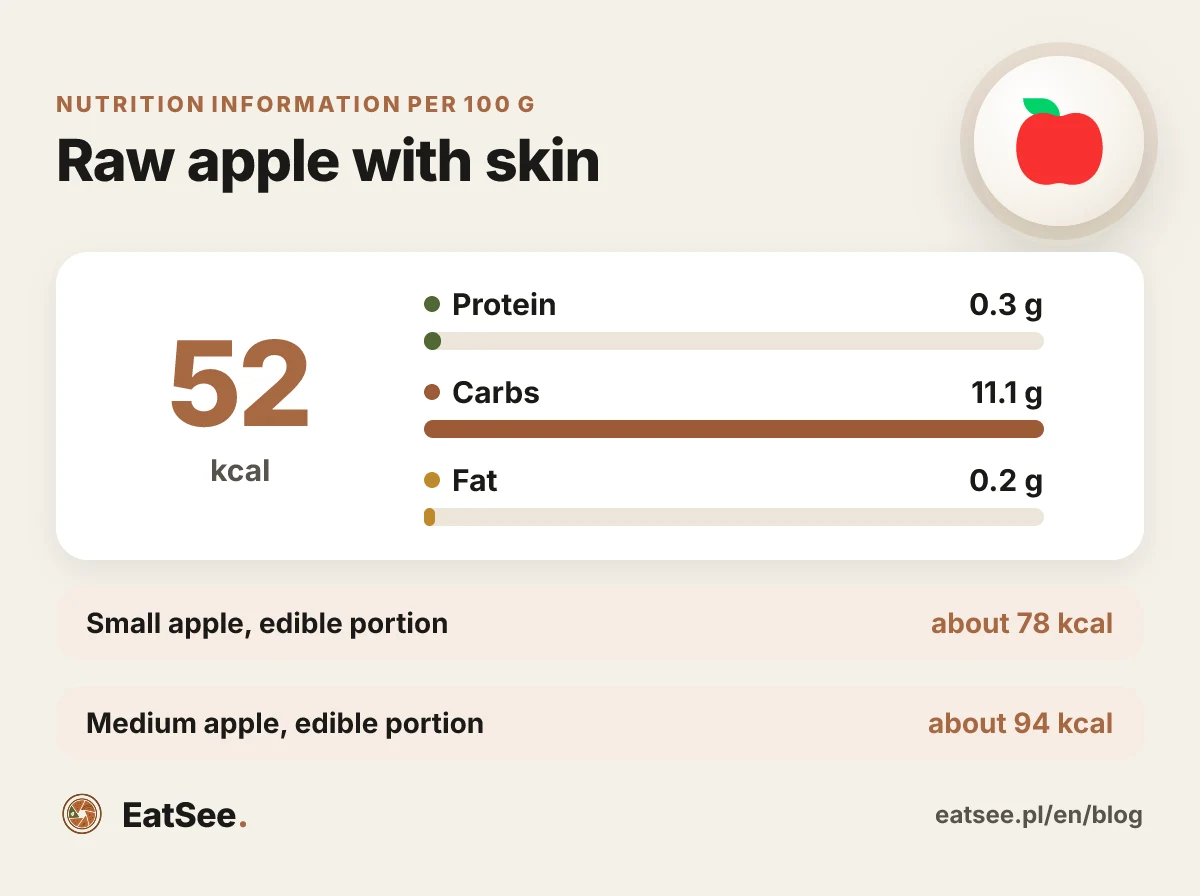
How many calories are in an apple? A medium apple with an edible weight of about 180 g provides about 94 kcal, while 100 g of raw apple with skin has about 52 kcal. A small apple (150 g) has about 78 kcal, and a large one (220 g) has about 114 kcal. Baking without toppings does not significantly change the calories in the whole fruit, while drying concentrates them.
- Small apple, edible portionabout 78 kcal
- Medium apple, edible portionabout 94 kcal
How many calories are in an apple, depending on its size?
The easiest way to count calories is to use the edible portion's weight, excluding the core and seeds. Apples can vary considerably in size, so one may weigh just over 100 g or more than 250 g. The serving sizes below are practical examples, not fixed standards.
| Apple size | Edible weight | Calories |
|---|---|---|
| Small | about 150 g | about 78 kcal |
| Medium | about 180 g | about 94 kcal |
| Large | about 220 g | about 114 kcal |
| 100 g of apple | 100 g | about 52 kcal |
These are estimates and may vary slightly depending on the variety, ripeness, and individual fruit. If your apple is especially large, it's best to weigh it after removing the core or estimate its weight. For more tips on estimating portions, see our guide on how to estimate a serving without a scale.
Does the variety of apple affect its calorie content?
Variety matters, but usually less than the fruit's weight. Sweeter apples may contain slightly more sugars, while juicier ones differ in water content. However, there is no single calorie count that applies to every variety—the differences also depend on ripeness and growing conditions.
If you eat apples regularly and don't know the exact variety, you can estimate about 52 kcal per 100 g. This is a convenient reference for raw apples with skin. There's no need to look up a separate chart for every variety if you just want a practical estimate.
How many calories are in baked and dried apples?
A baked apple without toppings has roughly the same number of calories as the raw fruit used to make it. If a medium apple weighed 180 g before baking, it contained about 94 kcal. The fruit may lose water as it bakes, so 100 g of baked apple can have more calories than 100 g of raw apple—the weight changes, but the fruit's energy content doesn't disappear.
Toppings change the calorie count. Sugar, honey, crumble, butter, and nuts increase the dessert's calories, so it's worth counting them separately. An apple baked with cinnamon is different from an apple topped with crumble—the dish's name alone isn't enough to estimate the serving accurately.
Dried apples are more concentrated because they lose most of their water. They have about 243 kcal per 100 g, but 100 g of dried apple is quite a large serving compared with fresh fruit. A handful weighing 30 g provides about 73 kcal. Check the ingredients, as some dried fruit contains added sugar.
| Form of apple | Calories |
|---|---|
| Raw, with skin | About 52 kcal / 100 g |
| Baked, without toppings | Calories in the whole fruit are similar to those in the raw apple before baking |
| Dried | About 243 kcal / 100 g |
What macronutrients does an apple contain?
100 g of raw apple contains about 0.3 g of protein, 11.1 g of available carbs, and 0.2 g of fat. It also contains about 2.4 g of fiber and 10.4 g of sugars. Sugars are part of the carbs, so they aren't counted a second time.
Nutrition information in charts may vary because sources don't all define carbs the same way. Some include fiber in the total, while others list fiber separately. If you'd also like to learn about protein, fat, and carbs in other foods, read our article on what macronutrients are.
Can apples help with weight loss?
An apple does not cause weight loss or burn fat on its own. It can fit into an eating pattern that supports gradual weight loss: it's a serving of fruit, contains water and fiber, and has fewer calories than many sweet snacks. What matters is what the apple replaces—and what your overall diet looks like.
For one person, an apple may be a convenient snack between meetings; for another, it might go in oatmeal or be dessert after dinner at their mom's. You can pair it with plain yogurt or cottage cheese if you'd like a snack with more protein that keeps you full longer. But there's no need to force yourself to eat apples or treat them as a must-have food in your diet.
If your goal is weight loss, a moderate calorie deficit may help—not one “weight-loss” food. You can check estimated values with our calorie deficit calculator and read about how to count calories to better understand serving sizes without turning every meal into a math test.
How can you count the calories in an apple day to day?
For the most accurate estimate, weigh the edible portion of the fruit and multiply its weight by about 0.52 kcal per gram. For example: 170 g of apple × 0.52 kcal equals about 88 kcal. If you're eating an apple on the go, you can simply use the estimate for a small, medium, or large apple in the table.
When counting calories in dishes with apple, include the other ingredients too. Add the oats and milk in oatmeal, and the honey, butter, or crumble in a baked dessert. EatSee lets you estimate calories and macronutrients from a meal photo or short description, and you can adjust the result by changing the serving size or ingredients. It's an estimate, so for a whole, plain apple, simply weighing it or making a rough visual estimate is often enough.
FAQs
How many calories are in a medium apple?
How many calories are in a small apple?
Do apples cause weight gain?
How many calories are in a baked apple?
How many calories are in dried apples?
This article is for informational purposes and does not replace advice from a doctor or dietitian. Nutrition information is approximate—it depends on the variety, brand, and preparation method. Check the product packaging for exact information. This article was prepared by the EatSee editorial team. Editorial policy.