 EatSee
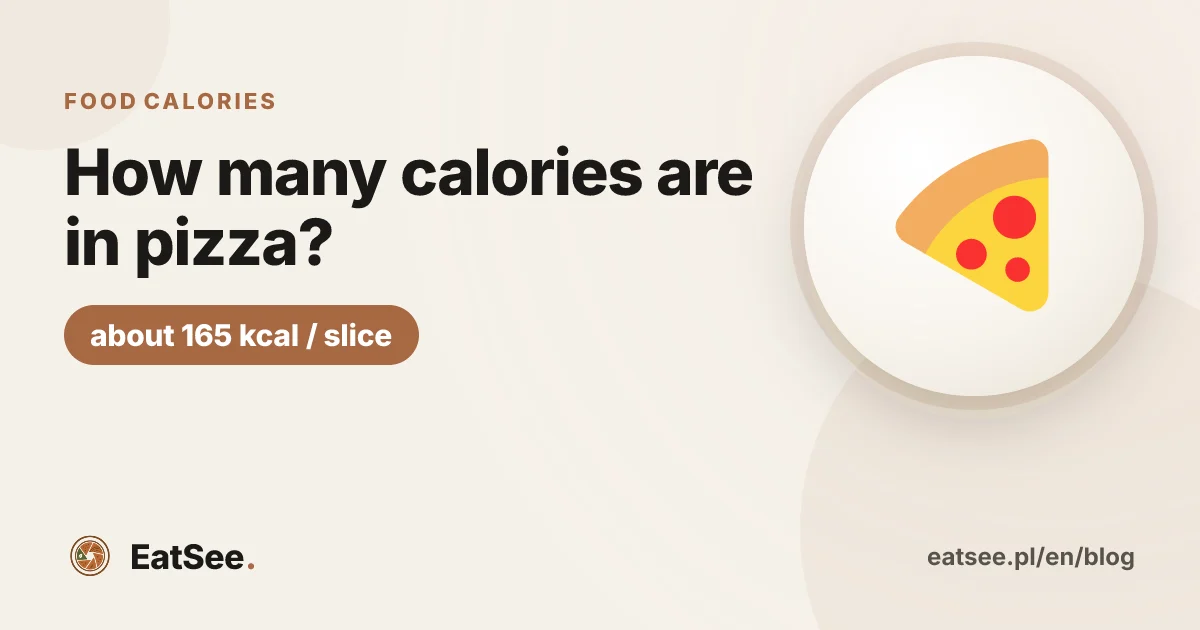
How many calories are in pizza? A typical margherita has approximately 240 kcal per 100 g, or about 165 kcal in one of the 8 slices of a 30 cm pizza; an example whole pizza weighs 550 g and contains about 1,320 kcal. A slice of salami pizza often has about 230 kcal, but crust thickness, cheese, and portion size can make a big difference.
How many calories are in a slice of pizza and in a whole pizza?
The easiest way to estimate calories is to know the pizza's weight and its calories per 100 g. Calculate the calories in your portion like this: kcal per 100 g × portion weight in grams ÷ 100. If you don't have a scale, you can estimate the size of a slice using the tips in our article on how to estimate a portion without a scale.
Below are examples for a 30 cm pizza cut into 8 slices. The weight and calorie content of an actual pizza depend on the recipe, amount of cheese, toppings, and preparation method—use the chart as a reference, not as a value that applies to every pizzeria.
| Type of pizza | Example whole pizza weight | kcal per 100 g | 1 slice (1/8) | Whole pizza |
|---|---|---|---|---|
| Margherita, thin crust | about 450 g | about 250 kcal | about 141 kcal | about 1,125 kcal |
| Margherita, standard crust | about 550 g | about 240 kcal | about 165 kcal | about 1,320 kcal |
| Salami, standard crust | about 650 g | about 280 kcal | about 228 kcal | about 1,820 kcal |
| Margherita, thick crust | about 700 g | about 250 kcal | about 219 kcal | about 1,750 kcal |
In this chart, one slice is one-eighth of a pizza. If a restaurant cuts it into 6 slices, each slice will be larger than in this example, but that won't magically change the pizza's calorie content. When ordering, check the diameter, too: a 40 cm pizza has about 1.8 times the surface area of a 30 cm pizza with a similar crust, so it usually weighs more and contains more calories.
How many calories are in margherita and salami pizza?
Margherita is usually a simpler point of comparison: crust, tomato sauce, cheese, and basil. In our example, it has about 240 kcal per 100 g. One-eighth of a 30 cm pizza has about 165 kcal, and the whole pizza about 1,320 kcal.
Salami pizza often has more calories per 100 g because salami and cheese are relatively high in calories, and toppings can also add plenty of fat. The example in the chart has about 280 kcal per 100 g, about 228 kcal per slice, and about 1,820 kcal for the whole pizza. Extra cheese, olive oil, or high-fat toppings can increase these values.
The name of a pizza doesn't tell you everything. Two margheritas can differ in the amount of cheese, crust thickness, or weight, and extra olive oil can change the calorie count without changing the size. If calorie tracking is new to you, take a look at our guide on how to count calories—it shows you a simple way to account for portions and ingredients.
Thin or thick crust—which has fewer calories?
Thin crust doesn't always mean fewer calories per 100 g. If there's a lot of cheese and toppings on a smaller amount of crust, each 100 g may have a similar or even higher calorie count than pizza with a thicker crust. The total weight of your portion matters, too.
In the example chart, the thin-crust margherita weighs about 450 g and has about 1,125 kcal. The thick-crust one weighs about 700 g and has about 1,750 kcal. This difference is mainly due to the assumed weight of the whole pizza in this example—not because every thin crust is “light” and every thick crust is “heavy.”
So when comparing two pizzas, look at the whole picture: diameter, weight, amount of cheese, and toppings. If you choose thin crust but order a large salami pizza with extra cheese, it may still be high in calories. A slice of a thicker, simpler pizza may contain fewer calories than a large slice of a heavily topped one.
What affects the calorie count of pizza the most?
Portion size and weight, the amount of cheese, and the toppings usually matter most. The word “pizza” alone isn't enough to determine the calories. Factors include:
- Diameter and number of slices - one slice can mean very different portion sizes.
- Crust - its thickness and weight affect the calorie count of the whole pizza.
- Cheese and olive oil - adding more increases the calorie content, even if the pizza looks similar.
- Toppings - salami, bacon, or extra cheese usually add more calories than vegetables.
- Preparation method - the amount of fat and the crust ingredients vary from one restaurant to another.
Vegetables such as mushrooms, bell peppers, or onions don't automatically make a pizza low in calories, but they can add variety to the meal. With salty cheeses and cured meats, it's also worth keeping salt in mind. If you know the portion weight or have nutrition information from the restaurant, that will usually be more useful than guessing from a photo alone.
Does pizza fit into a weight-loss plan?
Yes—pizza can be part of your meal plan even when you're trying to lose weight. Changes in body weight are mainly determined by your energy balance over time, not by whether you have a slice of pizza on Friday. You don't need to skip meals afterward or “make up for” what you ate with exercise.
Planning your portion can help. Two slices of the margherita in this example have about 330 kcal, while two slices of salami pizza have about 456 kcal. You can have them with a salad or other vegetables, then plan the rest of your day so your meals suit your goal and appetite. There's no one right number of slices for everyone—your daily calorie needs, the size of the pizza, and what else you eat all matter.
If you’re planning weight loss, start with a realistic goal rather than drastically cutting back on food. A calorie deficit calculator and our article on how a calorie deficit works may help. Pizza won’t undo your progress, just as a “light” dinner alone won’t guarantee progress overnight.
How can you estimate the calories in pizza?
If you have a label, menu, or information from the restaurant, check the calories per 100 g and the weight of your serving. Then multiply the first value by the number of grams and divide by 100. Example: 240 kcal per 100 g × 140 g serving ÷ 100 = 336 kcal.
If you don’t know the weight, you can log an approximate number of slices and their type, and treat the result as an estimate. There’s no need to count every crumb—in everyday eating, consistency that makes sense is what matters most. Find more practical tips in our article on counting calories from a meal photo.
You can also use EatSee: the app estimates calories and macronutrients from a meal photo, and you can adjust the result by changing the serving size or adding a short description. With pizza, it’s especially helpful to specify how many slices you had, what kind of crust it was, and whether there was extra cheese. It’s still an estimate, but often a more convenient starting point than entering the ingredients from scratch.
FAQs
How many calories are in one slice of pizza?
How many calories are in a whole 30 cm pizza?
Does thin-crust pizza have fewer calories?
Does salami pizza have more calories than margherita?
Can you eat pizza while trying to lose weight?
This article is for informational purposes and does not replace advice from a doctor or dietitian. Nutrition information is approximate—it depends on the variety, brand, and preparation method. Check the product packaging for exact information. This article was prepared by the EatSee editorial team. Editorial policy.